
Overview
Geologists study the materials that make up the earth, the features and structures found on Earth as well as the processes by which these features and structures formed. Our department has a wide range of expertise in geological sciences, including field-based studies (e.g., mineral deposit research, volcanology, sedimentology, tectonics, petrology, hydrogeology), experimental research (e.g. hydrofracking, rock deformation, volcanic processes, C02 sequestration), and laboratory analyses (e.g. petrography, petrology, geochronology).
What makes the program unique?
- The Geological Science program in EOAS is consistently ranked as one of the best geological science programs in Canada, and in the top 20 internationally.
- We house world-class instrumentation for isotopic and geochemical research (PCIGR), the Mineral Deposit Research Unit (MDRU), and Vancouver is the world headquarters for Mineral deposit exploration.
- British Columbia is an ideal natural laboratory to foster combined field and laboratory research.
- Industry and government collaborations are extensive and many graduate students are funded by Industrial partnerships, which typically lead to fulltime employment.
Quick Facts
Program Enquiries
Contact the program
Admission Information & Requirements
1) Check Eligibility
Minimum Academic Requirements
The Faculty of Graduate and Postdoctoral Studies establishes the minimum admission requirements common to all applicants, usually a minimum overall average in the B+ range (76% at UBC). The graduate program that you are applying to may have additional requirements. Please review the specific requirements for applicants with credentials from institutions in:
Each program may set higher academic minimum requirements. Please review the program website carefully to understand the program requirements. Meeting the minimum requirements does not guarantee admission as it is a competitive process.
English Language Test
Applicants from a university outside Canada in which English is not the primary language of instruction must provide results of an English language proficiency examination as part of their application. Tests must have been taken within the last 24 months at the time of submission of your application.
Minimum requirements for the two most common English language proficiency tests to apply to this program are listed below:
TOEFL: Test of English as a Foreign Language - internet-based
Overall score requirement: 100
Reading
22
Writing
22
Speaking
23
Listening
22
IELTS: International English Language Testing System
Overall score requirement: 7.0
Reading
6.5
Writing
6.5
Speaking
7.0
Listening
6.5
Other Test Scores
Some programs require additional test scores such as the Graduate Record Examination (GRE) or the Graduate Management Test (GMAT). The requirements for this program are:
The GRE is not required.
Prior degree, course and other requirements
Prior Degree Requirements
Students admitted to the Ph.D. degree program normally possess a master's degree in an area of science or applied science, with clear evidence of research ability or potential.
2) Meet Deadlines
September 2026 Intake
Application Open Date
01 October 2025Canadian Applicants
International Applicants
January 2027 Intake
Application Open Date
01 April 2026Canadian Applicants
International Applicants
3) Prepare Application
Transcripts
All applicants have to submit transcripts from all past post-secondary study. Document submission requirements depend on whether your institution of study is within Canada or outside of Canada.
Letters of Reference
A minimum of three references are required for application to graduate programs at UBC. References should be requested from individuals who are prepared to provide a report on your academic ability and qualifications.
Statement of Interest
Many programs require a statement of interest, sometimes called a "statement of intent", "description of research interests" or something similar.
Supervision
Students in research-based programs usually require a faculty member to function as their thesis supervisor. Please follow the instructions provided by each program whether applicants should contact faculty members.
Instructions regarding thesis supervisor contact for Doctor of Philosophy in Geological Sciences (PhD)
Prospective students are encouraged to read about the research interests https://www.eoas.ubc.ca/research/areas of individual faculty members to identify who would be a suitable supervisor and to contact this person before applying to the department.
Citizenship Verification
Permanent Residents of Canada must provide a clear photocopy of both sides of the Permanent Resident card.
4) Apply Online
All applicants must complete an online application form and pay the application fee to be considered for admission to UBC.
Research Information
Research Focus
Research within our program includes: - the effects of climate change on landscapes, surface processes, and terrestrial sedimentary deposits - carbon sequestration processes at and near the surface of the Earth - processes involved in the genesis of mineral deposits - composition and thermal structure of the mantle underlying the oldest portions of the earth (cratons) - reservoir characterisation of unconventional petroleum resources - strain localization and processes in structural geology - processes operating in subduction zones - the origin and evolution of silicate magmas and mineralization potential - the reconstruction of the elevation of mountain belts through time - constraining the dynamics and geochemistry of the lithosphere through time - the distribution of elements and isotopes in Earth systems - volcanology and igneous petrology as related to the formation, transport and eruption of magma
Research Facilities
Our Geological Science program is housed in the recently constructed Earth System Science Building. Research facilities include, the Pacific Centre for Isotopic and Geochemical Research (PCIGR); the Electron Microbeam and XRD Facility (EMXDF), the Centre for Experimental Studies of the Lithosphere (CESL), and the Mineral Deposit Research Unit (MDRU).
Tuition & Financial Support
Tuition
| Fees | Canadian Citizen / Permanent Resident / Refugee / Diplomat | International |
|---|---|---|
| Application Fee | $116.25 | $168.25 |
| Tuition * | ||
| Installments per year | 3 | 3 |
| Tuition per installment | $1,875.34 | $3,294.66 |
| Tuition per year (plus annual increase, usually 2%-5%) | $5,626.02 | $9,883.98 |
| Int. Tuition Award (ITA) per year (if eligible) | $3,200.00 (-) | |
| Other Fees and Costs | ||
| Student Fees (yearly) | $1,144.10 (approx.) | |
| Costs of living | Estimate your costs of living with our interactive tool in order to start developing a financial plan for your graduate studies. | |
All fees for the year are subject to adjustment and UBC reserves the right to change any fees without notice at any time, including tuition and student fees. Tuition fees are reviewed annually by the UBC Board of Governors. In recent years, tuition increases have been 2% for continuing domestic students and between 2% and 5% for continuing international students. New students may see higher increases in tuition. Admitted students who defer their admission are subject to the potentially higher tuition fees for incoming students effective at the later program start date. In case of a discrepancy between this webpage and the UBC Calendar, the UBC Calendar entry will be held to be correct.
Financial Support
Applicants to UBC have access to a variety of funding options, including merit-based (i.e. based on your academic performance) and need-based (i.e. based on your financial situation) opportunities.
Program Funding Packages
Ph.D. students are guaranteed minimum funding of CAN $26,530.20 (plus tuition) per year for the first four years, which can consist of research assistantships (RAs) to help professors with their grants and contracts, teaching assistantships (TAs) to help teach courses and labs and grade assignments, scholarships and prizes, and combinations of all of the above.
Funding Statistics
This results in a net balance (any funding provided to the student minus tuition and fees) mean of $37,085 and median of $36,307.
- 15 students received Teaching Assistantships. Median TA funding based on 15 students was $5,614.
- 21 students received Research Assistantships. Median RA funding based on 21 students was $6,665.
- 10 students received Academic Assistantships. Median AA funding based on 10 students was $2,243.
- 21 students received internal awards. Median internal award funding based on 21 students was $11,349.
- 9 students received external awards. Median external award funding based on 9 students was $21,000.
Review methodology
Scholarships & awards (merit-based funding)
All applicants are encouraged to review the awards listing to identify potential opportunities to fund their graduate education. The database lists merit-based scholarships and awards and allows for filtering by various criteria, such as domestic vs. international or degree level.
Graduate Research Assistantships (GRA)
Many professors are able to provide Research Assistantships (GRA) from their research grants to support full-time graduate students studying under their supervision. The duties constitute part of the student's graduate degree requirements. A Graduate Research Assistantship is considered a form of fellowship for a period of graduate study and is therefore not covered by a collective agreement. Stipends vary widely, and are dependent on the field of study and the type of research grant from which the assistantship is being funded.
Graduate Teaching Assistantships (GTA)
Graduate programs may have Teaching Assistantships available for registered full-time graduate students. Full teaching assistantships involve 12 hours work per week in preparation, lecturing, or laboratory instruction although many graduate programs offer partial TA appointments at less than 12 hours per week. Teaching assistantship rates are set by collective bargaining between the University and the Teaching Assistants' Union.
Graduate Academic Assistantships (GAA)
Academic Assistantships are employment opportunities to perform work that is relevant to the university or to an individual faculty member, but not to support the student’s graduate research and thesis. Wages are considered regular earnings and when paid monthly, include vacation pay.
Financial aid (need-based funding)
Canadian and US applicants may qualify for governmental loans to finance their studies. Please review eligibility and types of loans.
All students may be able to access private sector or bank loans.
Foreign government scholarships
Many foreign governments provide support to their citizens in pursuing education abroad. International applicants should check the various governmental resources in their home country, such as the Department of Education, for available scholarships.
Working while studying
The possibility to pursue work to supplement income may depend on the demands the program has on students. It should be carefully weighed if work leads to prolonged program durations or whether work placements can be meaningfully embedded into a program.
International students enrolled as full-time students with a valid study permit can work on campus for unlimited hours and work off-campus for no more than 24 hours a week during academic sessions.
A good starting point to explore student jobs is the UBC Work Learn program or a Co-Op placement.
Tax credits and RRSP withdrawals
Students with taxable income in Canada may be able to claim federal or provincial tax credits.
Canadian residents with RRSP accounts may be able to use the Lifelong Learning Plan (LLP) which allows students to withdraw amounts from their registered retirement savings plan (RRSPs) to finance full-time training or education for themselves or their partner.
Please review Filing taxes in Canada on the student services website for more information.
Cost Estimator
Applicants have access to the cost estimator to develop a financial plan that takes into account various income sources and expenses.
Career Outcomes
35 students graduated between 2005 and 2013: 2 graduates are seeking employment; for 4 we have no data (based on research conducted between Feb-May 2016). For the remaining 29 graduates:
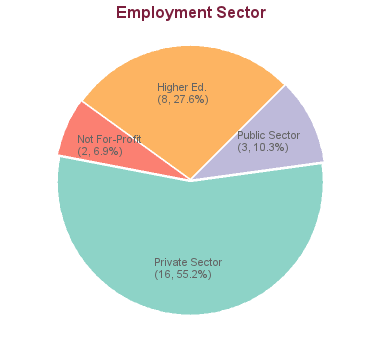
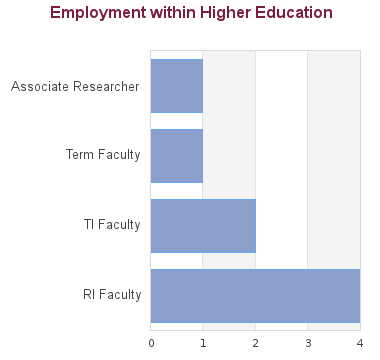
RI (Research-Intensive) Faculty: typically tenure-track faculty positions (equivalent of the North American Assistant Professor, Associate Professor, and Professor positions) in PhD-granting institutions
TI (Teaching-Intensive) Faculty: typically full-time faculty positions in colleges or in institutions not granting PhDs, and teaching faculty at PhD-granting institutions
Term Faculty: faculty in term appointments (e.g. sessional lecturers, visiting assistant professors, etc.)
Sample Employers in Higher Education
Western Michigan UniversityMemorial University of Newfoundland
University of British Columbia
Monash University
Hawaii Pacific University
British Columbia Institute of Technology
Autonomous University of Barcelona
Carleton University
Sample Employers Outside Higher Education
Dauber Creek Contracting Ltd.Government of Yukon
Empresa Minera Los Quenuales, a subsidiary of Glencore International AG
Joggins Fossil Institute
SSEF Swiss Gemmological Institute
Atlius Minerals Corp.
Mineral Services
Dr. von Moos AG Geotechnical Office
Barrick Gold Exploration
Lawrence Berkeley National Laboratory
Sample Job Titles Outside Higher Education
Geologist (2)Research Scientist
Senior Project Geologist
Senior Staff Geologist
Internal Controls Administrator
Volcanologist
Gemmologist
Technical Advisor in Geology
Senior Geochemist North America
Senior Geoscientist
PhD Career Outcome Survey
You may view the full report on career outcomes of UBC PhD graduates on outcomes.grad.ubc.ca.Disclaimer
These data represent historical employment information and do not guarantee future employment prospects for graduates of this program. They are for informational purposes only. Data were collected through either alumni surveys or internet research.Enrolment, Duration & Other Stats
These statistics show data for the Doctor of Philosophy in Geological Sciences (PhD). Data are separated for each degree program combination. You may view data for other degree options in the respective program profile.
ENROLMENT DATA
| 2023 | 2022 | 2021 | 2020 | 2019 | |
|---|---|---|---|---|---|
| Applications | 11 | 12 | 15 | 21 | 12 |
| Offers | 1 | 4 | 6 | 7 | 1 |
| New Enrolment | 0 | 1 | 4 | 7 | 1 |
| Total Enrolment | 27 | 29 | 28 | 21 | 23 |
Completion Rates & Times
Disclaimer
Upcoming Doctoral Exams
Thursday, 24 July 2025 - 10:00am - 5104, Earth Sciences Building, 2207 Main Mall
Research Supervisors
Supervision
Students in research-based programs usually require a faculty member to function as their thesis supervisor. Please follow the instructions provided by each program whether applicants should contact faculty members.
Instructions regarding thesis supervisor contact for Doctor of Philosophy in Geological Sciences (PhD)
Prospective students are encouraged to read about the research interests https://www.eoas.ubc.ca/research/areas of individual faculty members to identify who would be a suitable supervisor and to contact this person before applying to the department.
Advice and insights from UBC Faculty on reaching out to supervisors
These videos contain some general advice from faculty across UBC on finding and reaching out to a supervisor. They are not program specific.



Doctoral Citations
| Year | Citation |
|---|---|
| 2019 | Dr. Hund investigated the impacts of climate change and population growth on water supplies in the seasonally-dry tropics. She monitored streams and groundwater, modelled future climate scenarios, and worked with communities to develop novel tools to support adaptation to drought. |
| 2019 | Dr. Belley studied how the gemstones sapphire, spinel, and lapis lazuli formed on Baffin Island. He identified key metamorphic and geochemical factors that lead to gemstone genesis, and their relation to large-scale geologic processes. His findings contribute to our understanding of gem deposits and informs exploration strategies. |
| 2019 | Dr. Cutts used novel radiometric dating methods to study the dynamics of Himalayan-style mountain building and the role of the mantle in preserving Earth's oldest crust. His results provide key insight and predictions into the uniformity of continental collision through time and on the feedbacks and interactions between the crust and mantle and the other Earth systems. |
| 2018 | Dr. MacWilliam studied gold mineralization in western Yukon and eastern Alaska. She found that different styles of gold mineralization are genetically related. Her results advance the understanding of gold deposit models, which can be applied for the benefit of exploration in the northern Cordillera as well as globally. |
| 2018 | Dr. Skierszkan studied the mobility of two metallic contaminants, molybdenum and zinc, in mine waste rock and tailings by using stable isotope analyses. His research provides practitioners with a new tool to trace the release and attenuation of metals in mine waste and thus improve environmental management at mine sites. |
| 2018 | Dr. Rabayrol studied the formation of gold deposits in Anatolia in Turkey. He showed the genetic relationship between the Arabian continental collision, mantle flow, magmatism and gold mineralization. His research provides the mining industry with a new exploration model in Anatolia, and insights into metallogeny in collisional tectonic domains. |
| 2018 | Dr. Fourny studied layered intrusions, which are fossil magma chambers that represent natural laboratories, to examine how magma solidifies. She analyzed the chemistry of samples from the Kiglapait layered intrusion of coastal Labrador in northern Canada to reconstruct its entire crystallization history. These results can be used as a template for examining other geologically more complex intrusions worldwide. |
| 2018 | Dr. Fagan investigated the ruby and pink sapphire deposits of southwest Greenland. He found that gem corundum forms in unusual mafic-ultramafic rocks that have metamorphosed at high pressure and temperature. This study illuminates the role of recrystallization and hydrous-halide fluids in the formation of coloured gemstone deposits. |
| 2018 | Dr. Hilchie developed new methods to rigorously test for the action of chemical processes that produce and differentiate rocks. His applications of these methods inform the nature of chemical variability in some of the oldest volcanic rocks on Earth. |
| 2018 | Dr. Letham developed new laboratory techniques for analyzing fine-grained sedimentary reservoir rocks. Application of these techniques will lead to more efficient exploitation of shale oil and shale gas reservoirs. |
Pages
Sample Thesis Submissions
Further Information
Specialization
UBC and the Province of British Columbia offer exceptional opportunity for combined field and laboratory research. The Canadian Cordillera offers research opportunities in:
- petrology of intrusive and volcanic rocks of many kinds, and of metamorphic rocks of all grades
- structural studies of complex metamorphic terrains exposed in three dimensions
- metalliferous deposits of varied genetic types
- mineral exploration methods; mineralogy associated with many different environments
- complexly folded and faulted successions of bedded rocks in the mountain belts and plateaus, and in virtually undisturbed coal- and gas-bearing strata of the north-eastern province
- numerous problems of engineering, environmental geology-related to water, slope stability, natural geological hazards, and hydrogeology (lakes, fjords, deltas, tidal flats, continental shelf, and oceanic depths provide a wide range of aquatic environments for students interested in sedimentology, geochemistry, biostratigraphy, and geological oceanography)
Program Website
Faculty Overview
Academic Unit
Program Identifier
Classification
September 2026 Intake
January 2027 Intake
Program Enquiries
Contact the program
Departments/Programs may update graduate degree program details through the Faculty & Staff portal. To update contact details for application inquiries, please use this form.

Curious about UBC for grad school?
Our community of scholars is one of the world’s finest, committed to discovering and sharing knowledge, and to tackling the challenges that face our world.