Emma Betz
Why did you decide to pursue a graduate degree?
The idea of conducting research terrified me, where does one start? However, during my undergrad at UBC, through programs like Work Learn and working as a Research Assistant, I learned that research doesn't have to be grand unifying theories or finding cures. Research is working together to take small steps to expand our understanding of a topic. It is the collaborative, small victories that motivate me to continue pursuing research.
Why did you decide to study at UBC?
I completed my undergrad at UBC and what attracted me was how interdisciplinary the research done on campus was. I wasn't exactly sure what I wanted to pursue, because I had so many interests, I just couldn't choose. I was able to double major in Earth and Ocean Sciences as well as Classical and Near Eastern Archaeology. I feel so fortunate that during my undergrad, there were so many research, professional, and learning opportunities available. UBC made it so I didn't have to choose one thing! After completing my MSc. at Oxford, I knew I wanted to pursue a PhD and I looked at, and applied to, many universities. I was incredibly disappointed in the lack of collaboration and interdisciplinary work being done at other universities; I did not get the same sense of being able to pursue and combine different fields. Additionally, the world class lab facilities and mentors at UBC are hard to beat, I knew I had to come back to UBC!
What is it specifically, that your program offers, that attracted you?
To echo my previous response, the interdisciplinary nature of the University, and especially the Earth, Ocean, and Atmospheric Sciences department allow me to pursue so many avenues of research. The department especially has such a diverse range of experts that interdisciplinary work comes naturally! I also really love the opportunity to develop my teaching skills. I know teaching is something I want to be part of my career and the department has many opportunities to help me achieve that.
What was the best surprise about UBC or life in Vancouver?
The diversity. I'm from a relatively small town in Nebraska (the land of corn and cows...) so the diversity of people and opportunities really surprised me and has helped open my mind to and consider different perspectives.
What do you see as your biggest challenge(s) in your future career?
Narrowing down exactly what I want to do. It is hard to choose which path to take, academia, research, or industry.
How do you feel your program is preparing you for those challenges?
I feel my program gives me the chance to experience what each challenge could be like.
What aspects of your life or career before now have best prepared you for your UBC graduate program?
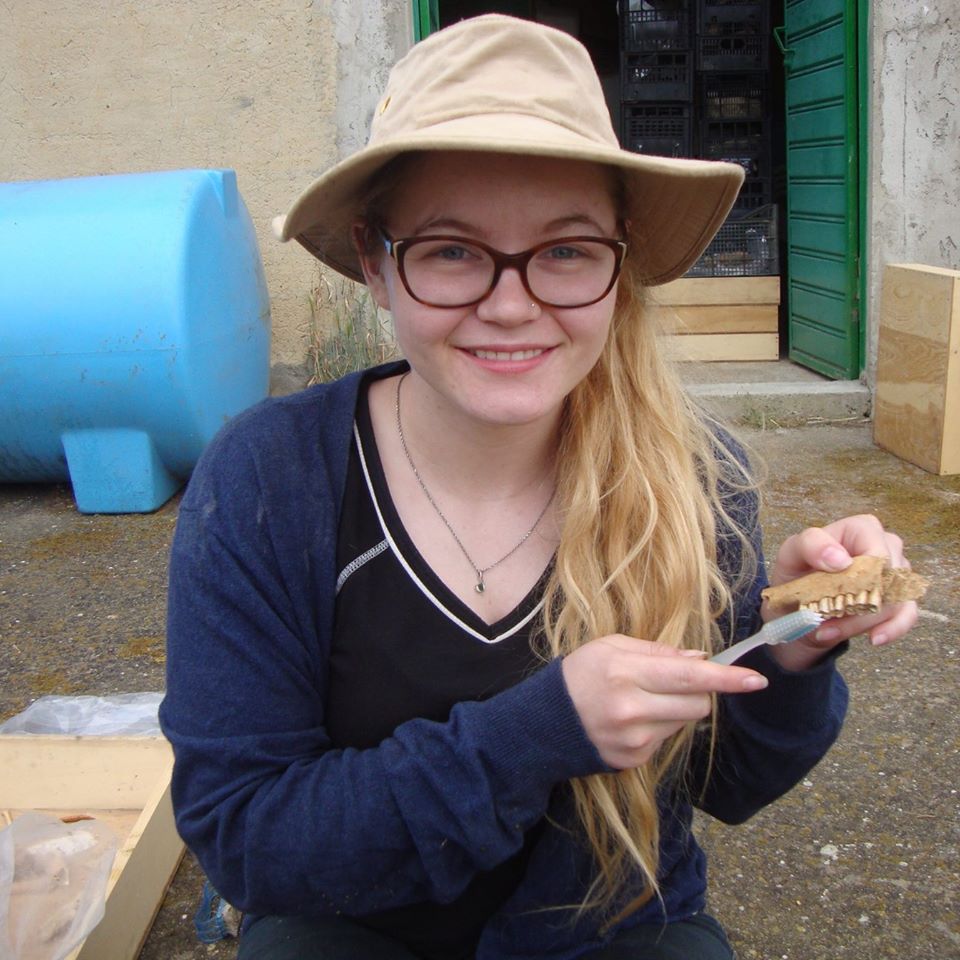
Certainly, what prepared me for my program is my undergraduate degree and the opportunities I had during that. I was able to work in the Laboratory of Archaeology at MOA to gain a lot of work experience. I was also able to work as a research assistant and even present several of my independent research projects at conferences held on campus. Those experiences really helped prepare me for both my graduate programs.
What do you like to do for fun or relaxation?
I love spending time with my two cats! Working in the lab can be daunting and long hours at times, so coming home and cuddling with my two cats really helps!
What advice do you have for new graduate students?
Take a deep breath! It can be very overwhelming starting a degree but if you break things down into more manageable steps, it makes it easier to continually work towards the end goal.