
Xin Ye
Job Title
Research Scientist
Employer
Arbutus Biopharma Inc.

Review details about the recently announced changes to study and work permits that apply to master’s and doctoral degree students. Read more
The UBC Department of Pathology and Laboratory Medicine offers a remarkable opportunity to study with numerous world renowned faculty and research programs. We are recognized as national and international leaders in both basic and clinical research. Experimental Pathology refers to research in any area of biomedical investigation that is relevant to human disease. Since it is necessary to understand the normal working of the system to fully define the changes associated with disease, the areas represented at UBC cover a wide range of fields and approaches. Work at all levels of biological organization is involved, from protein to lipoprotein biochemistry and molecular biology through cell and tumour biology, animal models for studies on pulmonary and cardiovascular pathophysiology and viral and bacterial infection processes, to clinical studies on human population and the AIDS epidemic.
We train students with varied backgrounds in science and medicine including: biochemistry, physiology, cell biology and microbiology/immunology.
We are committed to effective, cutting-edge, ethical research. The results of which will reach beyond the academic realm to effect positive change in the lives of our families, communities and, ultimately, our world.
The Faculty of Graduate and Postdoctoral Studies establishes the minimum admission requirements common to all applicants, usually a minimum overall average in the B+ range (76% at UBC). The graduate program that you are applying to may have additional requirements. Please review the specific requirements for applicants with credentials from institutions in:
Each program may set higher academic minimum requirements. Please review the program website carefully to understand the program requirements. Meeting the minimum requirements does not guarantee admission as it is a competitive process.
Applicants from a university outside Canada in which English is not the primary language of instruction must provide results of an English language proficiency examination as part of their application. Tests must have been taken within the last 24 months at the time of submission of your application.
Minimum requirements for the two most common English language proficiency tests to apply to this program are listed below:
Overall score requirement: 100
Reading
22
Writing
21
Speaking
21
Listening
22
Overall score requirement: 7.0
Reading
6.5
Writing
6.5
Speaking
6.5
Listening
6.5
Some programs require additional test scores such as the Graduate Record Examination (GRE) or the Graduate Management Test (GMAT). The requirements for this program are:
The GRE is required by some applicants. Please check the program website.
All applicants have to submit transcripts from all past post-secondary study. Document submission requirements depend on whether your institution of study is within Canada or outside of Canada.
A minimum of two references are required for application to graduate programs at UBC. Each graduate program determines the type of reference (e.g. academic, professional) and number of references they require which can range from 2 to 4. References should be requested from individuals who are prepared to provide a report on your qualifications for the program.
Many programs require a statement of interest, sometimes called a "statement of intent", "description of research interests" or something similar.
Students in research-based programs usually require a faculty member to function as their thesis supervisor. Please follow the instructions provided by each program whether applicants should contact faculty members.
Permanent Residents of Canada must provide a clear photocopy of both sides of the Permanent Resident card.
All applicants must complete an online application form and pay the application fee to be considered for admission to UBC.
| Fees | Canadian Citizen / Permanent Resident / Refugee / Diplomat | International |
|---|---|---|
| Application Fee | $116.25 | $168.25 |
| Tuition * | ||
| Installments per year | 3 | 3 |
| Tuition per installment | $1,875.34 | $3,294.66 |
| Tuition per year (plus annual increase, usually 2%-5%) | $5,626.02 | $9,883.98 |
| Int. Tuition Award (ITA) per year (if eligible) | $3,200.00 (-) | |
| Other Fees and Costs | ||
| Student Fees (yearly) | $1,144.10 (approx.) | |
| Costs of living | Estimate your costs of living with our interactive tool in order to start developing a financial plan for your graduate studies. | |
Applicants to UBC have access to a variety of funding options, including merit-based (i.e. based on your academic performance) and need-based (i.e. based on your financial situation) opportunities.
All full-time students who begin a UBC-Vancouver PhD program in January 2023 or later will be provided with a funding package of at least $26,000 for each of the first five years of their PhD. The funding package may consist of any combination of internal or external awards, teaching-related work, research assistantships, and graduate academic assistantships. In addition, the Program provides tuition funding of $2,000.00 per year for each of the first five years of the PhD. Please note that some graduate programs provide funding packages that are greater than $26,000 total per year. Please check with your prospective graduate program for specific details of the funding provided to its PhD students.
This results in a net balance (any funding provided to the student minus tuition and fees) mean of $38,667 and median of $36,409.
All applicants are encouraged to review the awards listing to identify potential opportunities to fund their graduate education. The database lists merit-based scholarships and awards and allows for filtering by various criteria, such as domestic vs. international or degree level.
Many professors are able to provide Research Assistantships (GRA) from their research grants to support full-time graduate students studying under their supervision. The duties constitute part of the student's graduate degree requirements. A Graduate Research Assistantship is considered a form of fellowship for a period of graduate study and is therefore not covered by a collective agreement. Stipends vary widely, and are dependent on the field of study and the type of research grant from which the assistantship is being funded.
Graduate programs may have Teaching Assistantships available for registered full-time graduate students. Full teaching assistantships involve 12 hours work per week in preparation, lecturing, or laboratory instruction although many graduate programs offer partial TA appointments at less than 12 hours per week. Teaching assistantship rates are set by collective bargaining between the University and the Teaching Assistants' Union.
Academic Assistantships are employment opportunities to perform work that is relevant to the university or to an individual faculty member, but not to support the student’s graduate research and thesis. Wages are considered regular earnings and when paid monthly, include vacation pay.
Canadian and US applicants may qualify for governmental loans to finance their studies. Please review eligibility and types of loans.
All students may be able to access private sector or bank loans.
Many foreign governments provide support to their citizens in pursuing education abroad. International applicants should check the various governmental resources in their home country, such as the Department of Education, for available scholarships.
The possibility to pursue work to supplement income may depend on the demands the program has on students. It should be carefully weighed if work leads to prolonged program durations or whether work placements can be meaningfully embedded into a program.
International students enrolled as full-time students with a valid study permit can work on campus for unlimited hours and work off-campus for no more than 24 hours a week during academic sessions.
A good starting point to explore student jobs is the UBC Work Learn program or a Co-Op placement.
Students with taxable income in Canada may be able to claim federal or provincial tax credits.
Canadian residents with RRSP accounts may be able to use the Lifelong Learning Plan (LLP) which allows students to withdraw amounts from their registered retirement savings plan (RRSPs) to finance full-time training or education for themselves or their partner.
Please review Filing taxes in Canada on the student services website for more information.
Applicants have access to the cost estimator to develop a financial plan that takes into account various income sources and expenses.
85 students graduated between 2005 and 2013: 1 graduate is seeking employment; for 8 we have no data (based on research conducted between Feb-May 2016). For the remaining 76 graduates:
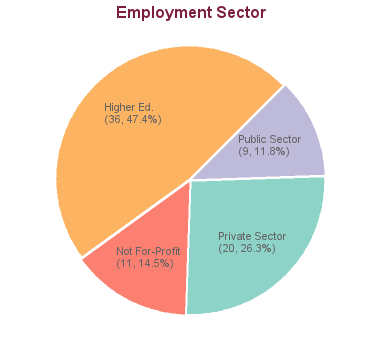
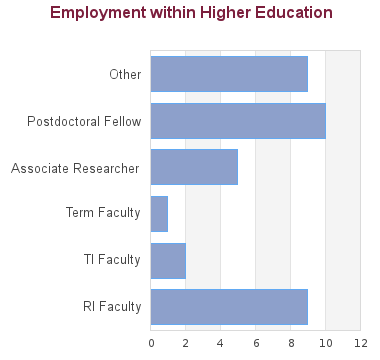
These statistics show data for the Doctor of Philosophy in Pathology and Laboratory Medicine (PhD). Data are separated for each degree program combination. You may view data for other degree options in the respective program profile.
| 2023 | 2022 | 2021 | 2020 | 2019 | |
|---|---|---|---|---|---|
| Applications | 6 | 9 | 9 | 2 | 5 |
| Offers | 1 | 2 | 2 | 1 | 2 |
| New Enrolment | 1 | 2 | 2 | 1 | 2 |
| Total Enrolment | 34 | 34 | 33 | 33 | 35 |
Students in research-based programs usually require a faculty member to function as their thesis supervisor. Please follow the instructions provided by each program whether applicants should contact faculty members.
These videos contain some general advice from faculty across UBC on finding and reaching out to a supervisor. They are not program specific.



| Year | Citation |
|---|---|
| 2020 | Dr. Mei developed a universal coating that could prevent catheter-associated urinary tract infections. With the application of the new coating, interactions between the catheters and urine components can be reduced. This study improves the safety and performance of medical devices, thus improving patients' health. |
| 2020 | Dr. Leung studied the role of proline isomerase Pin1 in prostate cancer. His research describes the interaction of Pin1 with the androgen receptor N-terminal domain and how targeting both of these proteins could reduce tumour growth. These findings enhance our understanding of the androgen receptor and aid in the development of novel therapies. |
| 2020 | Dr. Button investigated the role of high-density lipoproteins (HDL), particles in the blood made of fats and proteins, in protecting brain blood vessels in Alzheimer's disease. Her work shows that raising the levels of functional HDL through drugs or lifestyle changes may protect against brain blood vessel changes and prevent Alzheimer's disease. |
| 2020 | Dr. Ghaedi's research sought to clarify the developmental pathways and complexity of an immune cell population in the lung called type 2 innate lymphoid cells. Her work will help to better understand how these cells develop and regulate allergic diseases. |
| 2019 | Dr. Burugu characterized the immune system in the tissues of breast cancer patients. Using conventional and novel techniques, she found the presence of immune cells that can be reactivated to eliminate cancer cells. Her work can inform the prioritization and design of immunotherapy clinical trials for breast cancer patients. |
| 2019 | Too much blood clotting is a prevalent cause of death worldwide. Dr. Lin explored common virus infection as a risk factor. He found that a normal clotting protein is incorporated into several viruses and may contribute to heart disease and stroke. Since this clotting factor can enhance infection, new antiviral strategies are on the horizon. |
| 2019 | Dr. Ajaykumar studied cellular and mitochondrial toxicities of HIV antiretrovirals. He showed that some HIV drugs used in pregnancy increase the amount of mitochondrial DNA in infants, and that a newer drug increases mitochondrial toxicity. His research advances our understanding of the long-term safety of HIV therapy, for both mother and child. |
| 2019 | Dr. Obst investigated drug resistance in advanced prostate cancer. His work led to the recognition of a drug metabolism pathway exploited by resistant cells, and found that sensitivity could be restored using second-generation inhibitors. This study will hopefully aid in the development of novel compounds used to treat lethal prostate cancer. |
| 2019 | Dr. Yang developed a novel cell-free cancer therapeutic from bioreactor systems. She demonstrated that this therapeutic efficiently activated naive immune cells to kill cancer cells. The therapeutic consists of small natural molecules called microRNAs. Her research may result in a safer, faster and lower-cost approach for treating cancer. |
| 2019 | Dr. Soong used DNA sequencing and mouse models to characterize drug sensitivities in cancer cells with faulty DNA repair machineries. Altogether, this study increased our understanding of the additional function of a pre-existing drug, with novel potential therapeutic targets. |
Experimental Pathology refers to research in any area of biomedical investigation that is relevant to human disease. Since it is necessary to understand the normal working of the system to fully define the changes associated with disease, the areas represented at UBC cover a wide range of fields and approaches. Work at all levels of biological organization is involved, from protein to lipoprotein biochemistry and molecular biology through cell and tumour biology, animal models for studies on pulmonary and cardiovascular pathophysiology and viral and bacterial infection processes, to clinical studies on human population and the AIDS epidemic.
Departments/Programs may update graduate degree program details through the Faculty & Staff portal. To update contact details for application inquiries, please use this form.

Find out how Vancouver enhances your graduate student experience—from the beautiful mountains and city landscapes, to the arts and culture scene, we have it all. Study-life balance at its best!