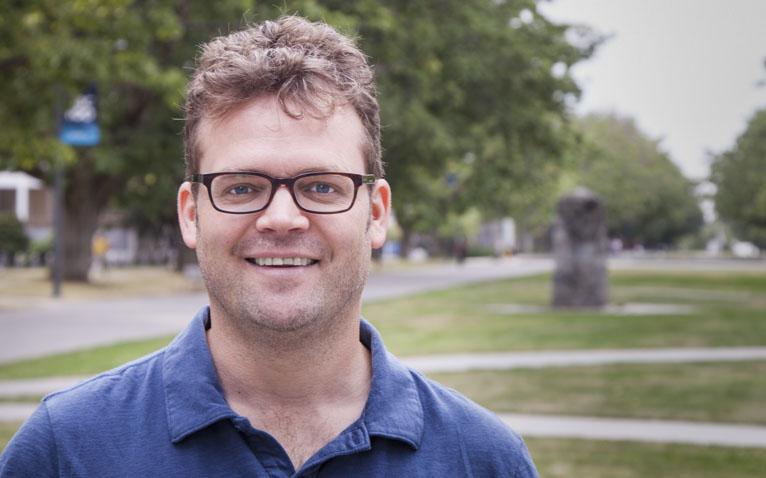
Aram Bajakian
Doctor of Philosophy in Music, Emphasis Ethnomusicology (PhD)
Navigating nostalgias: Musical identities in the Armenian diaspora
Review details about the recently announced changes to study and work permits that apply to master’s and doctoral degree students. Read more
The program can accommodate interests in ethnomusicology’s wide range of geographic areas and intellectual issues. We strongly encourage performance, close interaction with related disciplines (anthropology, area studies, sociology, linguistics, etc.), as well as border crossing within music (composition, theory, and historical musicology).
We balance diverse aspects of ethnomusicology by stressing performance, music transcription, theory and analysis, and social and intellectual history equally. We collaborate regularly with music theory, historical musicology, and composition divisions in the School of Music, and are linked to Area Studies and other departments across the university. Our goal for every student is to communicate our dedication to and love for the musics of the world, and to encourage original, critical, and constructive writing on music that will enable graduates to contribute actively to scholarship, education, and the cultures of world musics around us. The ethnomusicology students and faculty comprise a small community, but our time together is intense and vibrant, and excellent work is being done.
The Faculty of Graduate and Postdoctoral Studies establishes the minimum admission requirements common to all applicants, usually a minimum overall average in the B+ range (76% at UBC). The graduate program that you are applying to may have additional requirements. Please review the specific requirements for applicants with credentials from institutions in:
Each program may set higher academic minimum requirements. Please review the program website carefully to understand the program requirements. Meeting the minimum requirements does not guarantee admission as it is a competitive process.
Applicants from a university outside Canada in which English is not the primary language of instruction must provide results of an English language proficiency examination as part of their application. Tests must have been taken within the last 24 months at the time of submission of your application.
Minimum requirements for the two most common English language proficiency tests to apply to this program are listed below:
Overall score requirement: 90
Reading
22
Writing
21
Speaking
21
Listening
22
Overall score requirement: 6.5
Reading
6.0
Writing
6.0
Speaking
6.0
Listening
6.0
Some programs require additional test scores such as the Graduate Record Examination (GRE) or the Graduate Management Test (GMAT). The requirements for this program are:
The GRE is not required.
A Master's degree or equivalent
All applicants have to submit transcripts from all past post-secondary study. Document submission requirements depend on whether your institution of study is within Canada or outside of Canada.
Many programs require a statement of interest, sometimes called a "statement of intent", "description of research interests" or something similar.
Students in research-based programs usually require a faculty member to function as their thesis supervisor. Please follow the instructions provided by each program whether applicants should contact faculty members.
Permanent Residents of Canada must provide a clear photocopy of both sides of the Permanent Resident card.
All applicants must complete an online application form and pay the application fee to be considered for admission to UBC.
From the state-of-the-art Chan Centre for Performing Arts, one of North America's premier musical venues, historic Old Auditorium, intimate Roy Barnett Recital Hall, and comprehensive Electronic Music Studio, to university-wide facilities such as the Emerging Media Labs, graduate students at UBC Music have access to world-class facilities.
We accept a maximum of three new students per year, with preference given to candidates who intend to complete the PhD.
| Fees | Canadian Citizen / Permanent Resident / Refugee / Diplomat | International |
|---|---|---|
| Application Fee | $118.50 | $168.25 |
| Tuition * | ||
| Installments per year | 3 | 3 |
| Tuition per installment | $1,912.84 | $3,360.55 |
| Tuition per year (plus annual increase, usually 2%-5%) | $5,738.52 | $10,081.65 |
| Int. Tuition Award (ITA) per year (for eligible individuals) | $3,200.00 (-) | |
| Other Fees and Costs | ||
| Student Fees (yearly) | $1,169.35 (approx.) | |
| Costs of living | Estimate your costs of living with our interactive tool in order to start developing a financial plan for your graduate studies. | |
Applicants to UBC have access to a variety of funding options, including merit-based (i.e. based on your academic performance) and need-based (i.e. based on your financial situation) opportunities.
All full-time students in UBC-Vancouver PhD programs will be provided with a funding package of at least $40,000 for each of the first four years of their PhD from September 2026. The funding package may consist of any combination of internal or external awards, teaching-related work, research assistantships, and graduate academic assistantships. Please check with your prospective graduate program for specific details of the funding provided to its PhD students.
This results in a net balance (any funding provided to the student minus tuition and fees) mean of $30,377 and median of $28,264.
All applicants are encouraged to review the awards listing to identify potential opportunities to fund their graduate education. The database lists merit-based scholarships and awards and allows for filtering by various criteria, such as domestic vs. international or degree level.
Many professors are able to provide Research Assistantships (GRA) from their research grants to support full-time graduate students studying under their supervision. The duties constitute part of the student's graduate degree requirements. A Graduate Research Assistantship is considered a form of fellowship for a period of graduate study and is therefore not covered by a collective agreement. Stipends vary widely, and are dependent on the field of study and the type of research grant from which the assistantship is being funded.
Graduate programs may have Teaching Assistantships available for registered full-time graduate students. Full teaching assistantships involve 12 hours work per week in preparation, lecturing, or laboratory instruction although many graduate programs offer partial TA appointments at less than 12 hours per week. Teaching assistantship rates are set by collective bargaining between the University and the Teaching Assistants' Union.
Academic Assistantships are employment opportunities to perform work that is relevant to the university or to an individual faculty member, but not to support the student’s graduate research and thesis. Wages are considered regular earnings and when paid monthly, include vacation pay.
Canadian and US applicants may qualify for governmental loans to finance their studies. Please review eligibility and types of loans.
All students may be able to access private sector or bank loans.
UBC has working agreements with MPower Financing - an organization providing international students with no-cosigner, no-collateral education loans to study in Canada - and Windmill Microlending - an organization providing loans to skilled immigrants.
Many foreign governments provide support to their citizens in pursuing education abroad. International applicants should check the various governmental resources in their home country, such as the Department of Education, for available scholarships.
The possibility to pursue work to supplement income may depend on the demands the program has on students. It should be carefully weighed if work leads to prolonged program durations or whether work placements can be meaningfully embedded into a program.
International students enrolled as full-time students with a valid study permit can work on campus for unlimited hours and work off-campus for no more than 24 hours a week during academic sessions.
A good starting point to explore student jobs is the UBC Work Learn program or a Co-Op placement.
Students with taxable income in Canada may be able to claim federal or provincial tax credits.
Canadian residents with RRSP accounts may be able to use the Lifelong Learning Plan (LLP) which allows students to withdraw amounts from their registered retirement savings plan (RRSPs) to finance full-time training or education for themselves or their partner.
Please review Filing taxes in Canada on the student services website for more information.
Applicants have access to the cost estimator to develop a financial plan that takes into account various income sources and expenses.
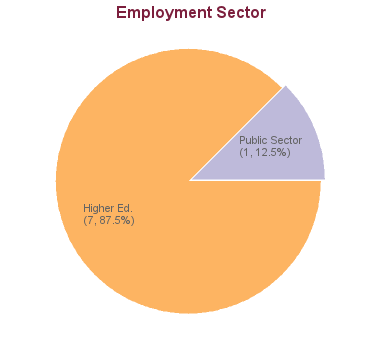
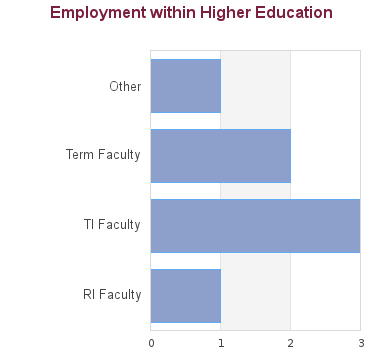
8 students graduated between 2007 and 2012. Of these, career information was obtained for 8 alumni (based on research conducted between Feb-May 2016):


Our recent PhDs have been successful in landing tenure-track positions at major universities including MIT, University of Waterloo, UC Davis, Tennessee State, and the Indonesian Institute of the Arts. Others have gone into music and film production. Some MA students continue to PhDs elsewhere or move on to other fields including law, arts administration, coding, and more.
These statistics show data for the Doctor of Philosophy in Music, Emphasis Ethnomusicology (PhD). Data are separated for each degree program combination. You may view data for other degree options in the respective program profile.
| 2024 | 2023 | 2022 | 2021 | 2020 | |
|---|---|---|---|---|---|
| Applications | 7 | 6 | 8 | 9 | 5 |
| Offers | 1 | 2 | 1 | 1 | 0 |
| New Registrations | 1 | 1 | 1 | 1 | 0 |
| Total Enrolment | 9 | 8 | 6 | 6 | 6 |
Students in research-based programs usually require a faculty member to function as their thesis supervisor. Please follow the instructions provided by each program whether applicants should contact faculty members.
| Year | Citation |
|---|---|
| 2021 | Dr. Ulehla's research concerns living songs from Slová¡cko, a rural region at the border of the Czech and Slovak Republics. Building upon familial musical lineages marked by rupture and continuity, she explores the life of song and its participation in an ethics of relation, enacted through emergent networks of human and more-than-human others. |
| 2020 | Dr. Peiris explored a drumming tradition in Sri Lanka, looking at how people have thought of it before, during, and after the encounter with European colonial rule. He used musical change as a lens to examine changing social contexts in South Asia, contributing to broader discussions about the reach and impact of ideas that cross national borders. |
| 2019 | Dr. Andrews explored indigenous spirituality in rural Ghana, focusing upon the intersections between music, ritual, and social development. His research illuminated the importance of recognizing and supporting indigenous spirituality as a key agent in mitigating cultural loss and how it contributes to a community's resilience. |
The ethnomusicology program accommodates interests in the discipline’s wide range of geographic areas and intellectual issues. We strongly encourage performance, close interaction with related disciplines (anthropology, area studies, sociology, linguistics, etc.), as well as border-crossing within music (composition, theory, and historical musicology).
Departments/Programs may update graduate degree program details through the Faculty & Staff portal. To update contact details for application inquiries, please use this form.