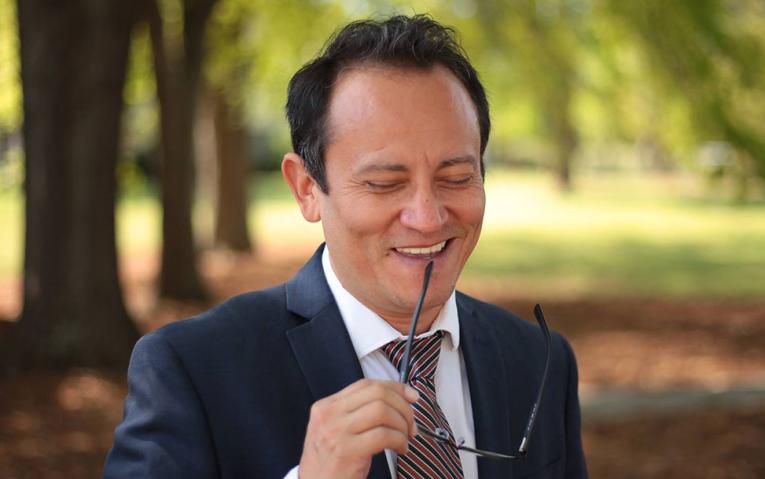
Javier Alvarez-Jaimes
Job Title
Associate Professor
Employer
North Carolina Central University

Review details about the recently announced changes to study and work permits that apply to master’s and doctoral degree students. Read more
The Graduate Program in Hispanic Studies offers a dynamic curriculum focusing on a contextualized knowledge of the languages, literatures, and cultures of Latin America, Spain, and other Spanish-speaking communities within the US and Canada.
Cutting-Edge Research:
The doctoral program in Hispanic Studies provides a wide variety of graduate courses taught by a growing team of faculty members specializing in innovative research, from Medieval Spanish literature to 21st-century Latin American and Caribbean cultures. The program offers solid academic training through our research clusters, reading groups, and research seminar. Students may participate in or even lead these initiatives, both within the department and in interdisciplinary centres, such as Green College, the Public Humanities Hub, and the Liu Institute for Global Issues.
Professional Development:
We provide a comprehensive Teaching Assistant training program as well as academic and professional development workshops—on grant writing, publishing, and conference attendance, among other topics—to help graduate students diversify their skillset and make an impact on society. 70% of graduates from our PhD program successfully landed careers in academia according to a career outcome survey.
Community Involvement:
Our annual Graduate Student Symposium allows graduate students to present their research to the entire Department. The biennial FHIS Graduate Student Conference, organized by the graduate students themselves with the assistance of faculty members, offers a platform to share research results with the wider academic community, network with local and international peers, and plan large-scale academic events. Through the FHIS Learning Centre, graduate students may also volunteer as tutors to help undergraduate students become proficient in the languages that are taught in our Department. In addition, the FHIS Cultural Club encourages students to discuss noteworthy social and cultural phenomena with our tight-knit community, engaging with current debates in our disciplines.
The Faculty of Graduate and Postdoctoral Studies establishes the minimum admission requirements common to all applicants, usually a minimum overall average in the B+ range (76% at UBC). The graduate program that you are applying to may have additional requirements. Please review the specific requirements for applicants with credentials from institutions in:
Each program may set higher academic minimum requirements. Please review the program website carefully to understand the program requirements. Meeting the minimum requirements does not guarantee admission as it is a competitive process.
Applicants from a university outside Canada in which English is not the primary language of instruction must provide results of an English language proficiency examination as part of their application. Tests must have been taken within the last 24 months at the time of submission of your application.
Minimum requirements for the two most common English language proficiency tests to apply to this program are listed below:
Overall score requirement: 90
Reading
22
Writing
21
Speaking
21
Listening
22
Overall score requirement: 6.5
Reading
6.0
Writing
6.0
Speaking
6.0
Listening
6.0
Some programs require additional test scores such as the Graduate Record Examination (GRE) or the Graduate Management Test (GMAT). The requirements for this program are:
The GRE is not required.
All applicants have to submit transcripts from all past post-secondary study. Document submission requirements depend on whether your institution of study is within Canada or outside of Canada.
A minimum of two references are required for application to graduate programs at UBC. Each graduate program determines the type of reference (e.g. academic, professional) and number of references they require which can range from 2 to 4. References should be requested from individuals who are prepared to provide a report on your qualifications for the program.
Many programs require a statement of interest, sometimes called a "statement of intent", "description of research interests" or something similar.
Students in research-based programs usually require a faculty member to function as their thesis supervisor. Please follow the instructions provided by each program whether applicants should contact faculty members.
Permanent Residents of Canada must provide a clear photocopy of both sides of the Permanent Resident card.
All applicants must complete an online application form and pay the application fee to be considered for admission to UBC.
We invite you to learn more about our research by visiting our departmental research spotlight webpage.
| Fees | Canadian Citizen / Permanent Resident / Refugee / Diplomat | International |
|---|---|---|
| Application Fee | $116.25 | $168.25 |
| Tuition * | ||
| Installments per year | 3 | 3 |
| Tuition per installment | $1,875.34 | $3,294.66 |
| Tuition per year (plus annual increase, usually 2%-5%) | $5,626.02 | $9,883.98 |
| Int. Tuition Award (ITA) per year (if eligible) | $3,200.00 (-) | |
| Other Fees and Costs | ||
| Student Fees (yearly) | $1,144.10 (approx.) | |
| Costs of living | Estimate your costs of living with our interactive tool in order to start developing a financial plan for your graduate studies. | |
Applicants to UBC have access to a variety of funding options, including merit-based (i.e. based on your academic performance) and need-based (i.e. based on your financial situation) opportunities.
All doctoral students are guaranteed a minimum funding package of $24,000 per year for the first five years of full-time study through a combination of Teaching Assistantships, Research Assistantships, awards, and scholarships. We offer a variety of additional financial aid options, including a Graduate Research Grant to conduct doctoral research and a Graduate Student Travel Grant to attend conferences abroad.
This results in a net balance (any funding provided to the student minus tuition and fees) mean of $40,643 and median of $38,167.
All applicants are encouraged to review the awards listing to identify potential opportunities to fund their graduate education. The database lists merit-based scholarships and awards and allows for filtering by various criteria, such as domestic vs. international or degree level.
Many professors are able to provide Research Assistantships (GRA) from their research grants to support full-time graduate students studying under their supervision. The duties constitute part of the student's graduate degree requirements. A Graduate Research Assistantship is considered a form of fellowship for a period of graduate study and is therefore not covered by a collective agreement. Stipends vary widely, and are dependent on the field of study and the type of research grant from which the assistantship is being funded.
Graduate programs may have Teaching Assistantships available for registered full-time graduate students. Full teaching assistantships involve 12 hours work per week in preparation, lecturing, or laboratory instruction although many graduate programs offer partial TA appointments at less than 12 hours per week. Teaching assistantship rates are set by collective bargaining between the University and the Teaching Assistants' Union.
Academic Assistantships are employment opportunities to perform work that is relevant to the university or to an individual faculty member, but not to support the student’s graduate research and thesis. Wages are considered regular earnings and when paid monthly, include vacation pay.
Canadian and US applicants may qualify for governmental loans to finance their studies. Please review eligibility and types of loans.
All students may be able to access private sector or bank loans.
Many foreign governments provide support to their citizens in pursuing education abroad. International applicants should check the various governmental resources in their home country, such as the Department of Education, for available scholarships.
The possibility to pursue work to supplement income may depend on the demands the program has on students. It should be carefully weighed if work leads to prolonged program durations or whether work placements can be meaningfully embedded into a program.
International students enrolled as full-time students with a valid study permit can work on campus for unlimited hours and work off-campus for no more than 24 hours a week during academic sessions.
A good starting point to explore student jobs is the UBC Work Learn program or a Co-Op placement.
Students with taxable income in Canada may be able to claim federal or provincial tax credits.
Canadian residents with RRSP accounts may be able to use the Lifelong Learning Plan (LLP) which allows students to withdraw amounts from their registered retirement savings plan (RRSPs) to finance full-time training or education for themselves or their partner.
Please review Filing taxes in Canada on the student services website for more information.
Applicants have access to the cost estimator to develop a financial plan that takes into account various income sources and expenses.
9 students graduated between 2005 and 2013: 1 graduate is seeking employment; for 1 we have no data (based on research conducted between Feb-May 2016). For the remaining 7 graduates:
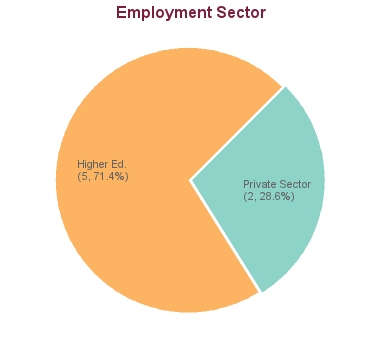
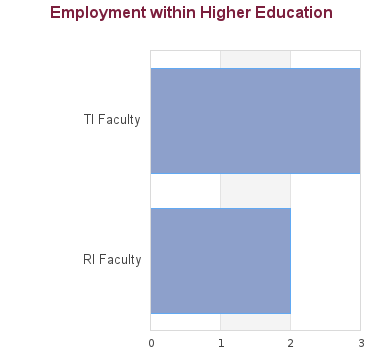
These statistics show data for the Doctor of Philosophy in Hispanic Studies (PhD). Data are separated for each degree program combination. You may view data for other degree options in the respective program profile.
| 2023 | 2022 | 2021 | 2020 | 2019 | |
|---|---|---|---|---|---|
| Applications | 5 | 14 | 11 | 10 | 6 |
| Offers | 1 | 3 | 3 | 4 | 2 |
| New Enrolment | 1 | 2 | 1 | 3 | 2 |
| Total Enrolment | 14 | 16 | 15 | 13 | 18 |
Students in research-based programs usually require a faculty member to function as their thesis supervisor. Please follow the instructions provided by each program whether applicants should contact faculty members.
| Year | Citation |
|---|---|
| 2013 | Dr. Grillo examined representations of race and ethnicity in discourses by Peruvian Andean indigenous authors, from the conquest of Peru by Spaniards in the 16th century to the present. She argues that an idea of race is imposed to Andean subjects through discourses on religion and education, and can be traced back to the beginning of colonization. |
| 2011 | Dr Karamán examined the role of Neo-Classicism and Graeco-Roman cultural heritage in shaping social and political institutions in Uruguay in the early nineteenth century. Popular culture contested the aspirations and achievements of the ruling class thus establishing a debate the impact of which still permeates contemporary political and cultural life. |
| 2009 | Dr. Fajardo examined the existential and phenomenological writing of the highly distinguished, albeit controversial, contemporary gay Spanish novelist and philosopher, Álvaro Pombo. In his research Dr. Fajardo showed that Pombo is above all, and despite what his critics say, a writer of great optimism and hope about the human condition. |
| 2009 | Dr. Park examined the populist political program led by a group of leftist intellectuals in Argentina during the 60s. She studied the relevance of poetic discourse in a political project for its fanciful and irrational practices. Her research indicates that the political vision informed by the group's novelistic discourse undermined the explicit political program. |
Hispanic Studies offers opportunities for advanced study in the literatures of Spain and Spanish America with courses ranging from topics in Spanish and Latin American literature and culture to the possibility of studying literary and cultural theory or issues in second-language instruction.
Departments/Programs may update graduate degree program details through the Faculty & Staff portal. To update contact details for application inquiries, please use this form.

Here, you can choose from more than 300 graduate degree program options and 2000+ research supervisors. You can even design your own program.