
Meghna Mohandas
Doctor of Philosophy in Planning (PhD)
Private space as sites of ‘othering’: Housing experiences of Indigenous migrant women in Bengaluru, India
Review details about the recently announced changes to study and work permits that apply to master’s and doctoral degree students. Read more
SCARP’s mission is to, through education and research, generate and transform knowledge into action by planning in partnership to improve lives and communities and the quality of built and natural environments. We are interested in attracting students to our PhD program who are interested in gaining the capabilities of a planning scholar – including deep awareness of intellectual history and planning theory, the diverse research designs employed in planning research, and in specific research methodologies – data collection and analysis. Planning scholarship touches on issues of participatory democracy, policy, and social and environmental change in place-based communities. Explicit connection of knowledge to action distinguishes planning research from that of many other disciplines.
SCARP’s faculty have diverse areas of expertise and interest that prospective students are encouraged to seek out, including sustainable/active transportation, disaster and resilience planning, social planning, place-based health and care planning, climate adaptation and energy transition, cross-cultural and indigenous planning, housing and infrastructure planning, community based urban design, and urbanisation and its challenges in the Global South, to name just a few of our faculty's research interests. Our research approach is inherently interdisciplinary and spans qualitative, quantitative, and participatory/action methodologies.
The Faculty of Graduate and Postdoctoral Studies establishes the minimum admission requirements common to all applicants, usually a minimum overall average in the B+ range (76% at UBC). The graduate program that you are applying to may have additional requirements. Please review the specific requirements for applicants with credentials from institutions in:
Each program may set higher academic minimum requirements. Please review the program website carefully to understand the program requirements. Meeting the minimum requirements does not guarantee admission as it is a competitive process.
Applicants from a university outside Canada in which English is not the primary language of instruction must provide results of an English language proficiency examination as part of their application. Tests must have been taken within the last 24 months at the time of submission of your application.
Minimum requirements for the two most common English language proficiency tests to apply to this program are listed below:
Overall score requirement: 100
Reading
22
Writing
21
Speaking
21
Listening
22
Overall score requirement: 7.0
Reading
6.5
Writing
6.5
Speaking
6.5
Listening
6.5
Some programs require additional test scores such as the Graduate Record Examination (GRE) or the Graduate Management Test (GMAT). The requirements for this program are:
The GRE is optional.
All applicants have to submit transcripts from all past post-secondary study. Document submission requirements depend on whether your institution of study is within Canada or outside of Canada.
Many programs require a statement of interest, sometimes called a "statement of intent", "description of research interests" or something similar.
Students in research-based programs usually require a faculty member to function as their thesis supervisor. Please follow the instructions provided by each program whether applicants should contact faculty members.
Permanent Residents of Canada must provide a clear photocopy of both sides of the Permanent Resident card.
All applicants must complete an online application form and pay the application fee to be considered for admission to UBC.
| Fees | Canadian Citizen / Permanent Resident / Refugee / Diplomat | International |
|---|---|---|
| Application Fee | $118.50 | $168.25 |
| Tuition * | ||
| Installments per year | 3 | 3 |
| Tuition per installment | $1,912.84 | $3,360.55 |
| Tuition per year (plus annual increase, usually 2%-5%) | $5,738.52 | $10,081.65 |
| Int. Tuition Award (ITA) per year (for eligible individuals) | $3,200.00 (-) | |
| Other Fees and Costs | ||
| Student Fees (yearly) | $1,169.35 (approx.) | |
| Costs of living | Estimate your costs of living with our interactive tool in order to start developing a financial plan for your graduate studies. | |
Applicants to UBC have access to a variety of funding options, including merit-based (i.e. based on your academic performance) and need-based (i.e. based on your financial situation) opportunities.
All full-time students in UBC-Vancouver PhD programs will be provided with a funding package of at least $40,000 for each of the first four years of their PhD from September 2026. The funding package may consist of any combination of internal or external awards, teaching-related work, research assistantships, and graduate academic assistantships. Please check with your prospective graduate program for specific details of the funding provided to its PhD students.
This results in a net balance (any funding provided to the student minus tuition and fees) mean of $53,281 and median of $54,533.
All applicants are encouraged to review the awards listing to identify potential opportunities to fund their graduate education. The database lists merit-based scholarships and awards and allows for filtering by various criteria, such as domestic vs. international or degree level.
Many professors are able to provide Research Assistantships (GRA) from their research grants to support full-time graduate students studying under their supervision. The duties constitute part of the student's graduate degree requirements. A Graduate Research Assistantship is considered a form of fellowship for a period of graduate study and is therefore not covered by a collective agreement. Stipends vary widely, and are dependent on the field of study and the type of research grant from which the assistantship is being funded.
Graduate programs may have Teaching Assistantships available for registered full-time graduate students. Full teaching assistantships involve 12 hours work per week in preparation, lecturing, or laboratory instruction although many graduate programs offer partial TA appointments at less than 12 hours per week. Teaching assistantship rates are set by collective bargaining between the University and the Teaching Assistants' Union.
Academic Assistantships are employment opportunities to perform work that is relevant to the university or to an individual faculty member, but not to support the student’s graduate research and thesis. Wages are considered regular earnings and when paid monthly, include vacation pay.
Canadian and US applicants may qualify for governmental loans to finance their studies. Please review eligibility and types of loans.
All students may be able to access private sector or bank loans.
UBC has working agreements with MPower Financing - an organization providing international students with no-cosigner, no-collateral education loans to study in Canada - and Windmill Microlending - an organization providing loans to skilled immigrants.
Many foreign governments provide support to their citizens in pursuing education abroad. International applicants should check the various governmental resources in their home country, such as the Department of Education, for available scholarships.
The possibility to pursue work to supplement income may depend on the demands the program has on students. It should be carefully weighed if work leads to prolonged program durations or whether work placements can be meaningfully embedded into a program.
International students enrolled as full-time students with a valid study permit can work on campus for unlimited hours and work off-campus for no more than 24 hours a week during academic sessions.
A good starting point to explore student jobs is the UBC Work Learn program or a Co-Op placement.
Students with taxable income in Canada may be able to claim federal or provincial tax credits.
Canadian residents with RRSP accounts may be able to use the Lifelong Learning Plan (LLP) which allows students to withdraw amounts from their registered retirement savings plan (RRSPs) to finance full-time training or education for themselves or their partner.
Please review Filing taxes in Canada on the student services website for more information.
Applicants have access to the cost estimator to develop a financial plan that takes into account various income sources and expenses.
22 students graduated between 2005 and 2013. Of these, career information was obtained for 22 alumni (based on research conducted between Feb-May 2016):
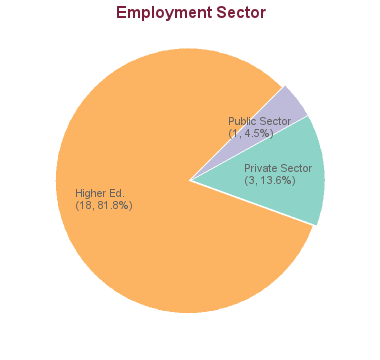
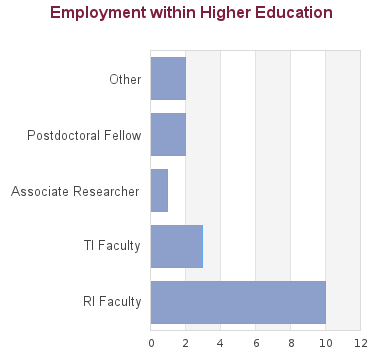
These statistics show data for the Doctor of Philosophy in Planning (PhD). Data are separated for each degree program combination. You may view data for other degree options in the respective program profile.
| 2024 | 2023 | 2022 | 2021 | 2020 | |
|---|---|---|---|---|---|
| New Registrations | 3 | 2 | 2 | 4 | 1 |
| Total Enrolment | 20 | 19 | 22 | 23 | 22 |
Students in research-based programs usually require a faculty member to function as their thesis supervisor. Please follow the instructions provided by each program whether applicants should contact faculty members.
This list shows faculty members with full supervisory privileges who are affiliated with this program. It is not a comprehensive list of all potential supervisors as faculty from other programs or faculty members without full supervisory privileges can request approvals to supervise graduate students in this program.
| Year | Citation |
|---|---|
| 2025 | Dr. Belkadi's work examines how uncertainty during the transition phase of displacement impacts key actors, from government agencies to displaced households. It highlights financial, spatial and social challenges that shape post-displacement outcomes. The study also offers insights for improving displacement policies and practices. |
| 2025 | Dr. Forouzandeh explored the role of real-world urban sustainability experimentations in addressing urgent challenges like affordable housing. Through diverse case studies across Canada, she identified key dynamics and dimensions shaping their success and developed frameworks to enhance their impact in connection to broader urban transformations. |
| 2024 | Dr. Khoo's research explores how cities can better plan for longevity through a humanistic perspective. As an ethnography, it showcases how people cope with urban change as they age. It tells of sacrifices and reveals tensions between the political and the personal, a nation's strife for excellence and the acts of endurance in seniors' everyday lives. |
| 2024 | Dr. Zaman investigated how state & nonstate actors intervene in disaster resilience planning, exposing disparities between international standards & local contexts using Pakistan as case study. Criticizing top-down governance, her research advocates prioritizing basic human needs alongside resilience for community wellbeing amidst climate crises. |
| 2023 | Dr. Akaabre studied traditional leasehold tenure in Ghana and found that the leasehold model is not equitable and secure, and in consequence, undermines investment in housing improvements and redevelopment. His study led to the development of a "famivest 80-20" model, aimed at securing improved tenure and financing housing redevelopment in cities. |
| 2022 | Dr. Brown explored the practices and policies surrounding homeless shelters in the U.S. and the ways different levels of policy are understood, constructed, and navigated in people's day-to-day lives. This research challenges how urban governments are managing homelessness, and the resultant stigmatization and criminalization of poverty. |
| 2022 | Dr. Stone demonstrates the nature of gentrification as a disaster for low-income communities, and how Hurricane Katrina cascaded into a subsequent disaster of gentrification for the Central City neighborhood of New Orleans. The dissertation includes a co-produced advocacy film to support voting for anti-gentrification candidates in New Orleans. |
| 2022 | Dr. Mayers examined the structural and societal systems that preclude equity-seeking groups from accessing safe environments and services that promote sustainable, healthy living. The purpose of her doctoral research was to examine the process in which decisions are made to propose more equitable city bicycling networks. |
| 2021 | Built form, health, housing, and demographic indicators are explored in Dr. Shulman's research. While results point to gentrification, they do not indicate displacement of low-income households. Findings are particularly important to policymakers and planners in facilitating a discussion about accessibility and social inequality. |
| 2021 | Dr. Douglas surveyed over 900 residents in the Greater Vancouver Regional District and conducted 15 in-depth interviews to try to find out. Read his thesis at greatneighbourhood.ca and learn how high-quality public space might improve residents' sense of community in high-density neighbourhoods. |
Planning emphasizes an integrated approach that encompasses urban policy and community development, international development, environmental and natural resources, urban design, and planning processes and methods.
Departments/Programs may update graduate degree program details through the Faculty & Staff portal. To update contact details for application inquiries, please use this form.