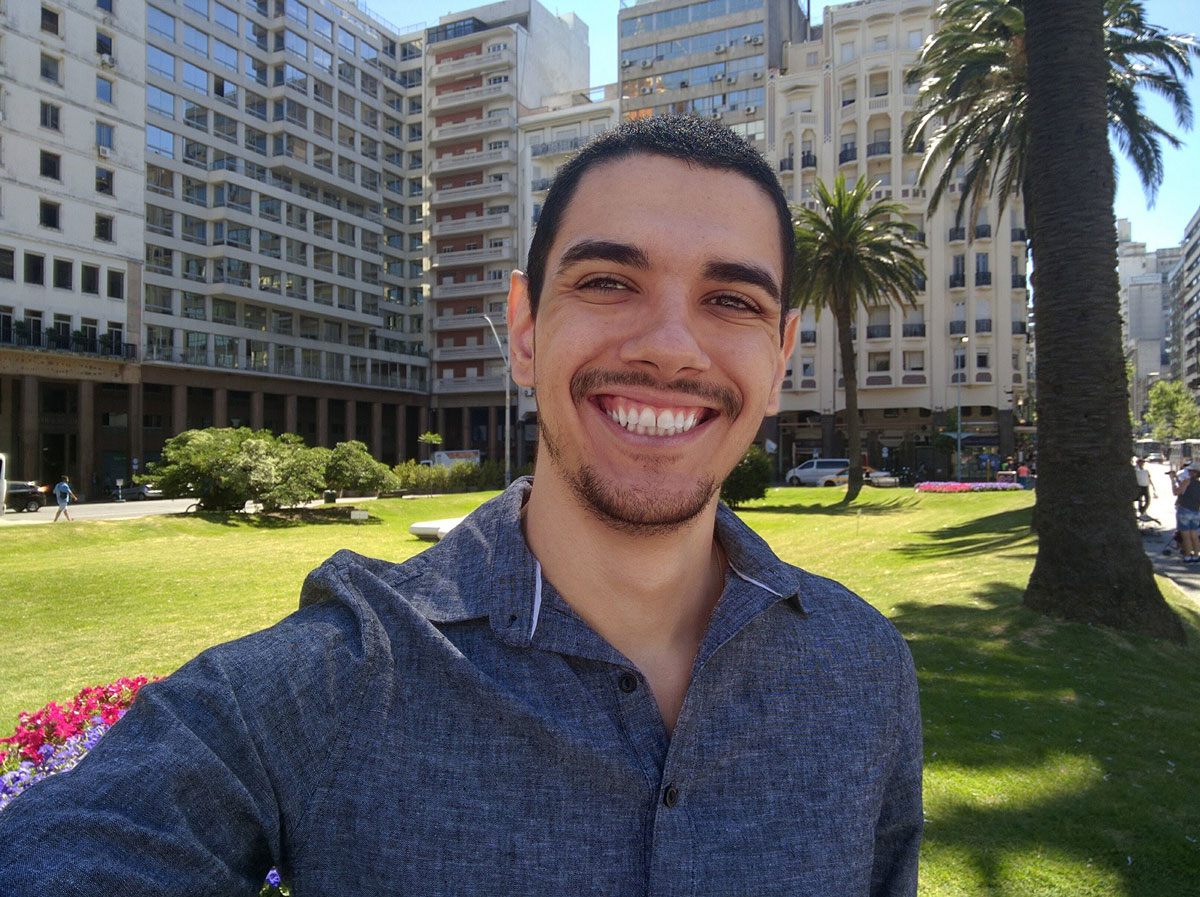
Daniel Holanda Noronha

Why did you decide to pursue a graduate degree?
I always enjoyed working towards solving a fun puzzle (research). For me, pursuing a graduate degree was a way to be able to become an expert in my field while having fun.
Why did you decide to study at UBC?
Before starting my PhD I was a Visiting International Research Student at UBC as part of the Emerging Leaders in the Americas Program (ELAP) for 5 months. During this time, I was lucky enough to work with a professor that was willing to tackle important and very interesting problems. At the same time, I got to experience life in Vancouver, which immediately felt like home.
What is it specifically, that your program offers, that attracted you?
The working environment definitely played a key role. I loved the feeling of being surrounded by extremely smart people and being able to learn something new from them every single day.
What was the best surprise about UBC or life in Vancouver?
I was definitely surprised by the number of opportunities and activities that are available for graduate students at UBC. The number of scholarships, the number of talks from leading researchers and the number of outdoor activities available impressed me.
What do you like to do for fun or relaxation?
The nature that surrounds Vancouver is astonishing, so I try to enjoy it as much as I can. My favourite activities are snowboarding in the nearby mountains during the winter and playing volleyball at the beach during the summer.
What advice do you have for new graduate students?
Although working hard is very important, you should enjoy some of the many fun activities that are available to you as a new UBC graduate student and as a Vancouver resident. Join a club at UBC, try a new sport, meet new people and don't forget to sleep.
 ,
,
Learn more about Daniel's research
Modern machine learning techniques are helping computing devices to see, hear, read, write, speak and even think on their own, which is enabling interaction to the physical world in an intelligent human-like way that was not possible before. However, today’s computing equipment is simply not sufficient for many envisaged machine learning applications. A specific kind of hardware called Field-Programmable Gate Array (FPGA) is emerging as a potential solution to this problem due to its ability to be programmed as a digital hardware circuit, which is not possible in CPUs or GPUs. My research focuses on enabling people that have no hardware design experience nor are machine-learning experts to properly program FPGAs, taking advantage of its full potential.