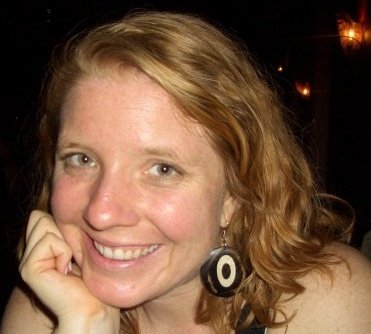
Chelsey Hauge
Why did you decide to pursue a graduate degree?
I decided to pursue my PhD because, after experiences working with non profits and action oriented groups, I figured out that I am most passionate about research and theory. I am very excited about and interested in the ways in which transnational groups of youth move through and create media, and hope to continue to be involved with and work with global youth movements and media throughout my research career.
Why did you decide to study at UBC?
I came to UBC for several reasons. Primarily, there a number of senior scholars and other students working in similar areas with whom I can collaborate and learn who have interests similar to my own. This has been key to developing my ideas and identifying my own interests. Also, as a native Californian who was living in New York City, I was excited about being back on the beautiful West Coast!
What was the best surprise about UBC or life in Vancouver?
I was so surprised at the level of attention my committee, and other students in my research group, gave to my work! I've never had so much attention paid to my interests, and this has been a huge asset. It's such an honor to work with people who really pay attention to my work, and as a result can give really critical, fruitful and important feedback. I've also been pleasantly surprised by all the wonderful, dear friends I have made - people with whom I hope to be on this academic journey for many years to come,.
What advice do you have for new graduate students?
Get to know people! Join groups! Work on research projects! Attend talks! It's so easy to isolate yourself, and then you lose out on the riches that graduate school can offer. And, of course - say no to drama. For whatever reason, grad students seem to love drama, it's super easy to get caught up in, and your life is so much better without it.
 ,
,

Learn more about Chelsey's research
Scores of youth media programs operate globally in the hope that media engagement will foster voice and empowerment for the young people involved, yet there is little understanding of the ways in which the media production and pedagogical practices of these programs are situated within broader discussions on media, development, literacy, and globalization. My research is about relational mobility in youth media, and attends specifically to a transnational youth media and development program in rural Nicaragua run by Plan International and Amigos de las Americas. Through video production, diverse youth narrate complicated stories about agency and mobility in a globalized world, stories that offer both resistance and reification of global narratives about hope, youth, and mobility. The task, and the youth's relationship to each other, is fraught: there is an insistence that they work together, that North American, Dominican and urban Nicaraguan youth have the right to enter into collaboration with rural Nicaraguan youth and communities and have a voice in the creation of videos and their subsequent sharing through in a variety of mediated spaces. There is an explicit insistence that youth have a story to tell, that that story is indeed tell-able through new media practices and that the story, told in new media, is related to their becoming leaders, activists, and young people involved in "development", or "civic engagement". This research explores these paradoxes, focusing on how youth media makers negotiate agency and mobility in media production, and how their media productions themselves are shaped by diverse and complicated mobilities.