Archived Content
This student profile has been archived and is no longer being updated.
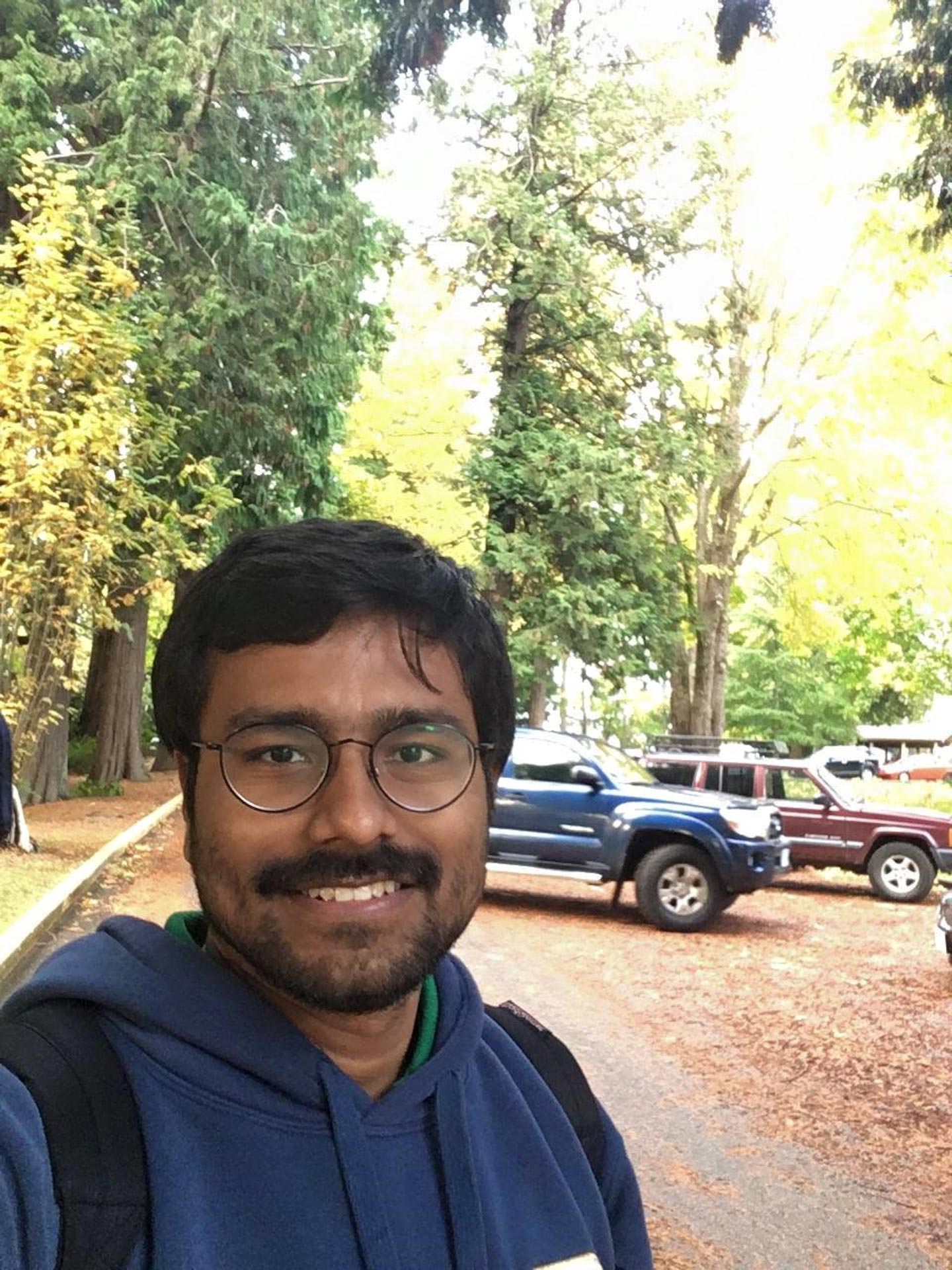
I have a deep passion for thinking critically about a subject and building knowledge. I have published in three international journals using material from my master's thesis. Also, I wanted to work in an area where I could have impact. I aspire to be a researcher and a teacher and I carry one year of experience in the latter profession.
To achieve my dream, I wanted to study in one of the best geotechnical schools in North America.
As a civil engineering graduate student I have worked extensively in finite element-based numerical modelling. Starting PhD, my goal was to work in micro mechanical behaviour of granular materials in the field of geotechnical engineering where there is considerable work to be done, and is fundamental in understanding phenomenological soil behaviours. I am able to work in this specific area in my current research group under the supervision of Dr. Mahdi Taiebat.
I was pleasantly surprised after coming to Vancouver that travelling within British Columbia is so effortless, thanks to the seamless service provided by Translink and the free pass I get as part of my four-year fellowship. In addition to this, the metro and the mundane diversity in Vancouver amazes me every weekend when I tour the city trying to find the best photography opportunities with my friends and colleagues.
I aim to do research and teach individuals in the future. So, I enjoy the challenge of sustaining the vagaries of elemental research and working with professors as a teaching assistant.
I want to plan for my near future and then follow a gradual path towards a future career. At present, I want to make specific, novel contributions and have a good number of publications from my PhD. Afterwards, I may consider working in the industry for a brief period before entering academia as my final career goal.
As a PhD student, I believe independent learning is very important. My supervisor helps me polish my ideas and focus on specific areas to maintain a steady direction. So far, I am taking the challenges and hopefully will be able to meet my goals through continuous preparation.
More than life, research work with my previous supervisor Dr. Debarghya Chakraborty at IIT Kharagpur in India have helped prepare for this program, in addition to being selected for the Four-Year Doctoral Fellowship at UBC.
I like to draw, write poems and go on long, unplanned trips.
The students who get admitted in research-based programs at UBC are natural self-educators and quite motivated individuals. I don't feel I can give them any specific advice, other than to live their dreams.
The arrangement of granular materials before undergoing cyclic back and forth loading can have significant effects on cyclic strength degradation and eventual liquefaction in undrained condition. Historically, soil fabric has been studied using limited anisotropic parameters with spherical particles, mostly limited to mechanical anisotropy suggested otherwise. However, strong contradicting evidence exists in literature which depicts stress-strain response of granular materials for constant void ratio and confining stress as a function of initial soil fabric. This can hold true for both drained and undrained behavior of cohesion-less materials. Also, if the limited effects of specific anisotropic parameters are removed and a wide range of parameters already available in literature are used, this can provide substantial evidence of the initial anisotropic effects. In our research, the influence of geometric anisotropy in terms of particle shape and multidirectional cyclic loading are also investigated in lieu of closely resembling the ideal conditions using Discrete Element Method.