
Drew Hall
Being a public scholar means connecting the "how" of the scholarship I engage in (the theory, the methods, the every-day activities that contribute to scholarship) with the "why". Public scholarship is a desperately-needed reframing of academic research that has the power to re-orient the academic enterprise towards justice in our current material reality. It's also a way that we can begin dismantling the ivory tower and democratize the production and usage of academic knowledge (though this is a lifelong journey!).


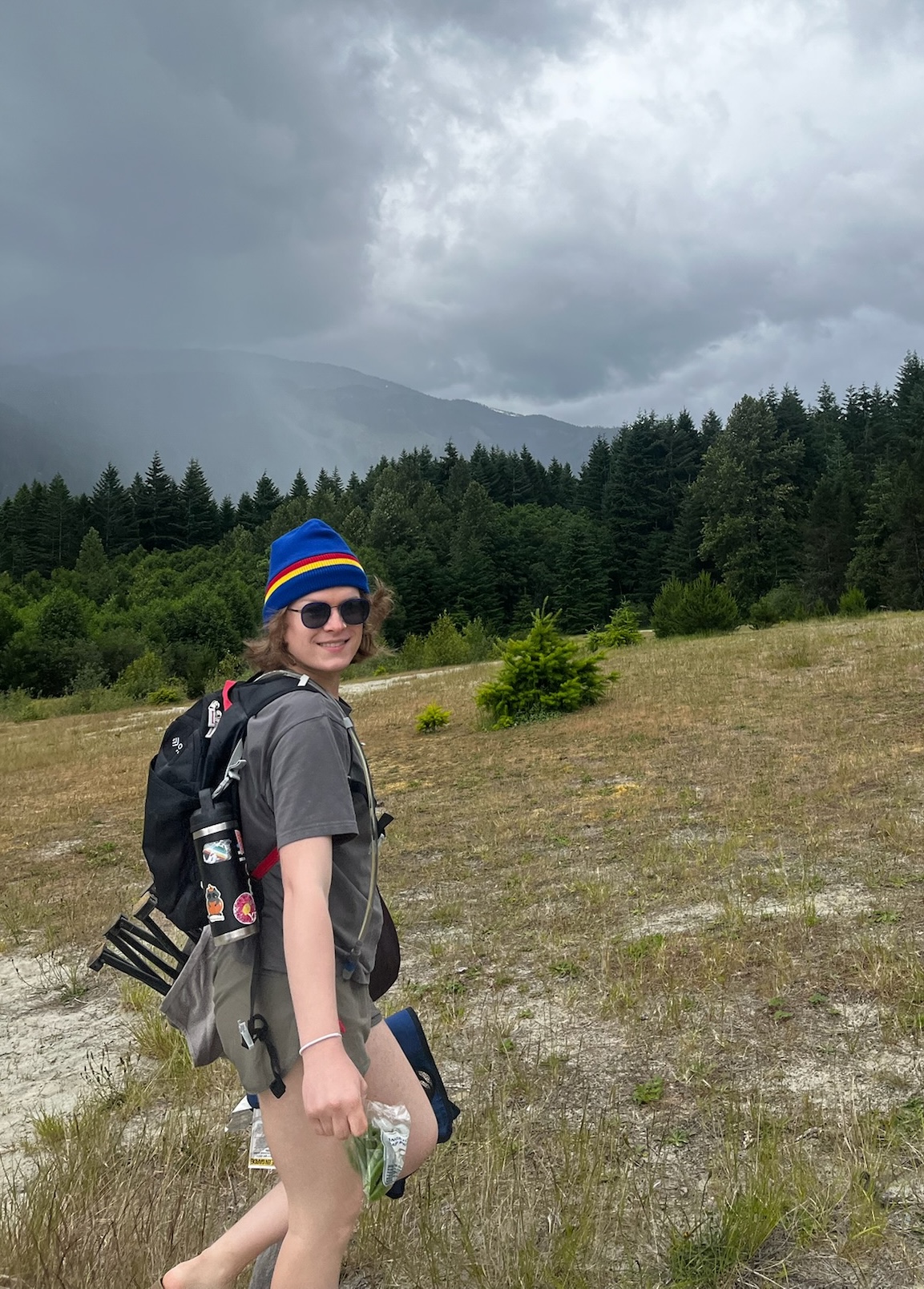
Research description
What does being a Public Scholar mean?
Being a public scholar means connecting the "how" of the scholarship I engage in (the theory, the methods, the every-day activities that contribute to scholarship) with the "why". In many cases, I've struggled with the stories that scientists tell ourselves — that our research is important because it produces the basic knowledge that will become the foundation of the theories, inventions, and world-changing breakthroughs of the "future." But the reality is that we are living through a "present" marked by death-inducing inequality and multiple ongoing genocides. As a trans person, I've also watched my own government mobilize the language of "basic knowledge" in my own field (biology) to attempt to erase the existence of people like me. Public scholarship is a desperately-needed reframing of academic research that has the power to re-orient the academic enterprise towards justice in our current material reality. It's also a way that we can begin dismantling the ivory tower and democratize the production and usage of academic knowledge (though this is a lifelong journey!).
In what ways do you think the PhD experience can be re-imagined with this Initiative?
Especially in science, doctoral research can easily become isolating and hyper-specialized. In the extreme case, this is both damaging for the mental health of graduate students and counterproductive, as research output becomes effectively "locked up" in specialized jargon making it accessible only to the people with access to and time for specialized training. To me, the Public Scholars Initiative helps me to imagine my own PhD in two ways: 1. It allows me to draw a direct connection between the research I'm engaging in and my own lived experience (something that scientific research rarely allows us to do!) in order to effect tangible real-world change. 2. It encourages interdisciplinary endeavours that not only cross boundaries, but also question the foundations of knowledge and challenge longstanding and entrenched discipline-specific dogma.
How do you envision connecting your PhD work with broader career possibilities?
I envision a career in biology/science education in some way or another. While my initially proposed PhD research allows me to ponder a specific topic (the biochemistry of cell walls in mosses!) in depth, it's missing out on many of the things that I consider crucial to education. My public scholarship work gives me the space to consider the philosophy of education, inclusive curricula and pedagogies, and critical theories from fields like gender studies and trans studies, solidifying my own approach towards educational praxis.
How does your research engage with the larger community and social partners?
This work is in the context of a broader project in the UBC Biology program aimed at increasing inclusivity around sex and gender topics in biology classrooms. The Biology Sex & Gender Working Group has already engaged in extensive review of the curricula of some biology courses at UBC and continues to support faculty members and course instructors to approach these topics with care and sensitivity. We aim to complement this work by focusing on topics (particularly plant and algal biology) that often don't get brought up in conversations about sex and gender and also by inviting student participants in our study to begin to imagine biology as a field that critiques its own assumptions, comments on and dismantles harmful structures and cultures, and understands itself through diverse ways of seeing and knowing. The outcomes of this work will be relevant not only for the specific courses we plan to engage with, but for all biology courses and their instructors who desire to engage with the multi-layered complexity of this topic. I am also excited about the possibility of expanding this work into thinking about how biology curricula in K-12 education touch on topics of sex and gender, and how we can use the things we learn from university settings to more broadly re-imagine biology education.
Why did you decide to pursue a graduate degree?
I began my graduate degree in botany because I was enthralled and fascinated by the ways that plants mobilize their expansive biochemistries to build their bodies, protect against radiation and predators, attract pollinators, etc. (and the ways that their scents, active biomolecules and cell-wall structures underpin almost every aspect of human life!).
Why did you choose to come to British Columbia and study at UBC?
I decided to study at UBC because of the botany program's focus on integrating cell and molecular biology with biodiversity.


