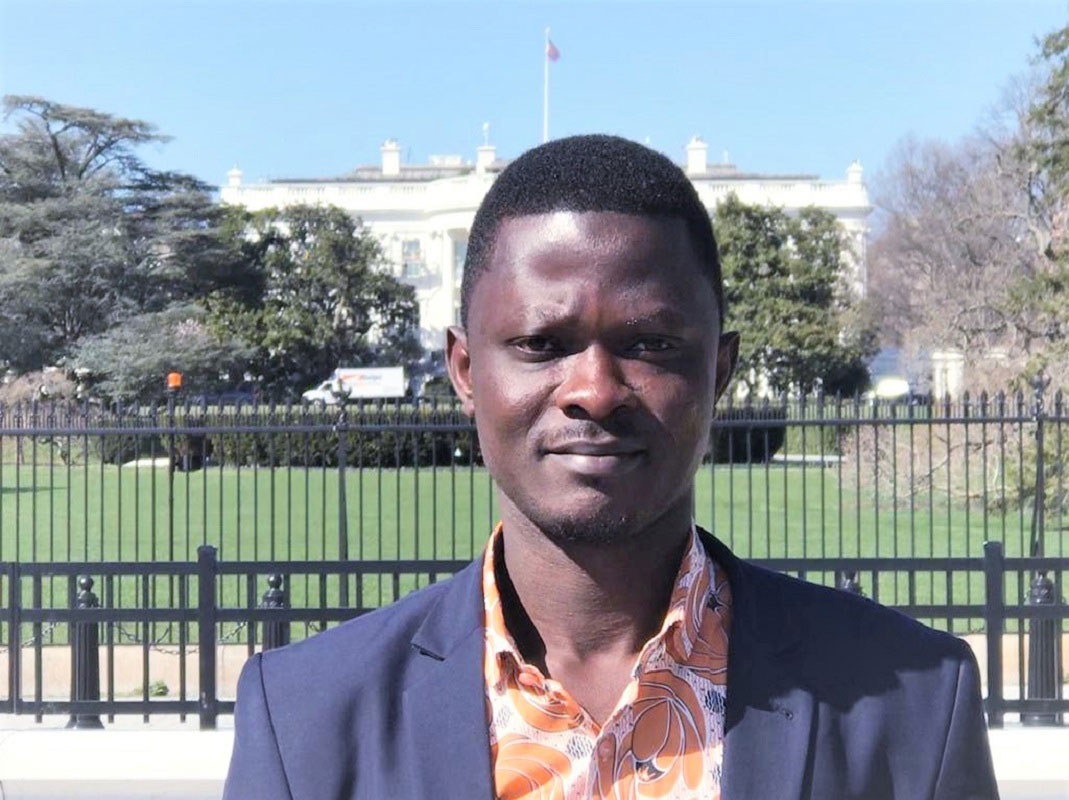
Paul Boniface Akaabre
Why did you decide to pursue a graduate degree?
Having gained some teaching and practical experience in development planning, a higher degree (PhD) in planning was necessary to acquire skills that would enable me to undertake independent research at a higher level and hence, contribute to planning theory.
Why did you decide to study at UBC?
A combination of factors made me opt to study at UBC: It's one of the world's renowned educational institutions (consistently ranked among the top 50) and the most international university in North America- where you can learn and network with scholars from diverse backgrounds across the globe. It also has a beautiful and serene campus- surrounded by sea with beaches that support academic and social life.
What is it specifically, that your program offers, that attracted you?
As one of the first dedicated planning schools in Canada, the SCARP PhD Program takes good care in matching students with experienced supervisors in the field of their studies and provides students with a collegial and convivial environment to pursue interdisciplinary research at the intersections of planning theory and practice.
What was the best surprise about UBC or life in Vancouver?
I'm still amazed to find Ghanaian groceries in Vancouver (Surrey) which makes me feel at home.
What aspect of your graduate program do you enjoy the most or are looking forward to with the greatest curiosity?
I enjoy PhD Colloquium where PhD students meet to share their research ideas with faculty members. Also, renowned planning scholars and theorists across the globe are invited to nurture us by sharing their experiences and career trajectory.
What do you see as your biggest challenge(s) in your future career?
Mainstream planning was seen to be a professional and technical discipline requiring skills in statistical and spatial analysis such as the use of Arc GIS, STATA, SPSS, etc. However, planning has now gone beyond being a technical disciple to include social and communicative, requiring qualitative research skills which I'm not comfortable in using and thus likely to affect my research work in the future.
I'm still amazed to find Ghanaian groceries in Vancouver which makes me feel at home.
SCARP emphasizes teamwork and collaborative research through its pedagogy that would help me work with other researchers to fill that void. Also, it provides doctoral students with training in planning research designs that involved both quantitative and qualitative research to cope with such challenges in the future.
What aspects of your life or career before now have best prepared you for your UBC graduate program?
After my master's degree, I worked as a part-time instructor at the Department of Planning of the University for Development Studies in Ghana and also as a research scholar of the Network of Excellence on Land Governance in Africa (NELGA)- established by the African Land Policy Centre (ALPC) in cooperation with the German Government (DAAD, BMZ & GIZ), World Bank, African Union, and other partners to strengthen land governance and policies in Africa. I also helped facilitated the preparation of Medium-Term Development Plans of some District Assemblies and participated in a series of conferences including the Annual World Bank Conference on Land and Poverty in Washington DC and the GIZ/AU Continental Conference on Land Governance in Ethiopia. These provided me with the relevant practical and research experience to shoulder the mantle of the doctoral program at the School of Community and Regional Planning.
What do you like to do for fun or relaxation?
I play soccer on weekends for fun and to keep my body fit. Also, I watch European soccer matches or movies with friends.
What advice do you have for new graduate students?
Communicate frequently with your supervisor(s) and establish a good working relationship with them and other faculty members as well as your colleagues. You should balance your schedule well - know when to attend to your academic work and when to socialize.

Learn more about Paul's research
Tenure security is an essential element in building community resilience and addressing urban inequalities– that is, if the governing structure is potent and people enjoy secure land tenure, they are more likely to plan ahead and invest in housing supply and resilience measures. Hence, my research aims to strengthen urban land governance, tenure security, and property rights by examining how land title structure in the urban area, particularly leasehold tenure and practices, influence housing delivery in terms of supply, affordability and the potential for redevelopment.