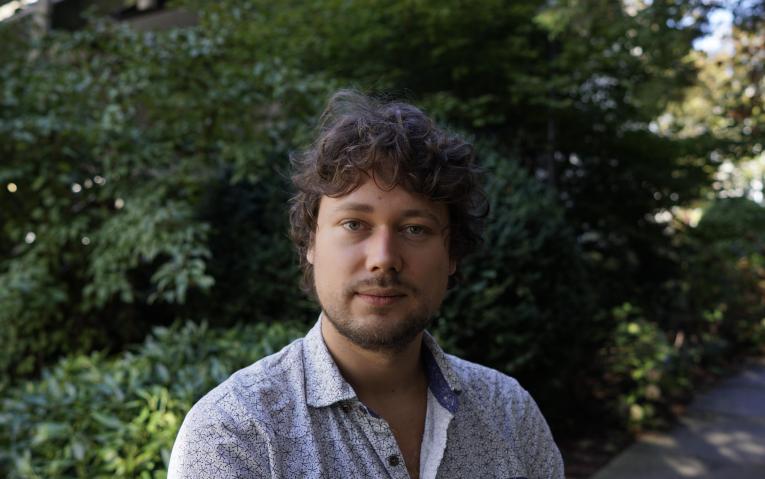
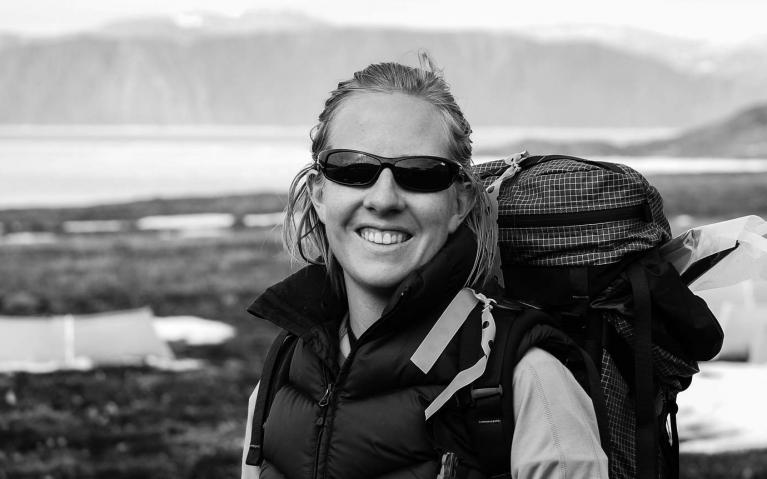
Anne Bjorkman
Job Title
Senior Lecturer (Associate Professor)
Employer
University of Gothenburg

Applicants to Master’s and Doctoral degrees are not affected by the recently announced cap on study permits. Review more details
Our program introduces students to independent research while broadening and deepening their contact with a selected aspect of Geography. Research can be conducted in these general thematic sub-disciplines: Biogeography; Climatology; Economic Geography; Environment and Sustainability; Feminist Geography; Geographic Information Science; Geomorphology; Historical Geography; Hydrology and Glaciology Indigenous Geographies; Political Geography; Social and Cultural Geography; and Urban Geography.
Our PhD program is flexible, research-intensive, and student-driven. Students come to the program from a variety of backgrounds and are mentored by outstanding scholars in geographical science, human geography, and geographical computational science. They are prepared for careers in academia, government, the private sector, or non-profit organizations, based on the expertise they develop in a specific field of research.
The Faculty of Graduate and Postdoctoral Studies establishes the minimum admission requirements common to all applicants, usually a minimum overall average in the B+ range (76% at UBC). The graduate program that you are applying to may have additional requirements. Please review the specific requirements for applicants with credentials from institutions in:
Each program may set higher academic minimum requirements. Please review the program website carefully to understand the program requirements. Meeting the minimum requirements does not guarantee admission as it is a competitive process.
Applicants from a university outside Canada in which English is not the primary language of instruction must provide results of an English language proficiency examination as part of their application. Tests must have been taken within the last 24 months at the time of submission of your application.
Minimum requirements for the two most common English language proficiency tests to apply to this program are listed below:
Overall score requirement: 100
Reading
22
Writing
21
Speaking
21
Listening
22
Overall score requirement: 7.0
Reading
6.5
Writing
6.5
Speaking
6.5
Listening
6.5
Some programs require additional test scores such as the Graduate Record Examination (GRE) or the Graduate Management Test (GMAT). The requirements for this program are:
The GRE is not required.
Applicants are required to upload a copy of their CV (maximum three pages).
All applicants have to submit transcripts from all past post-secondary study. Document submission requirements depend on whether your institution of study is within Canada or outside of Canada.
A minimum of three references are required for application to graduate programs at UBC. References should be requested from individuals who are prepared to provide a report on your academic ability and qualifications.
Many programs require a statement of interest, sometimes called a "statement of intent", "description of research interests" or something similar.
Students in research-based programs usually require a faculty member to function as their thesis supervisor. Please follow the instructions provided by each program whether applicants should contact faculty members.
The most important first steps in applying for admission to our graduate program is finding and approaching a potential supervisor in the department. This gives you an opportunity to discuss the research you are interested in completing as a graduate student. Every applicant to the graduate program should, in principle, contact a potential supervisor to confirm that they are interested in reviewing the application. This does not constitute a promise from the supervisor that the student will be admitted, since admissions decisions are made by the Graduate Committee; it only serves as an indication that the potential supervisor is willing to consider supervising a new, incoming student.
Permanent Residents of Canada must provide a clear photocopy of both sides of the Permanent Resident card.
All applicants must complete an online application form and pay the application fee to be considered for admission to UBC.
Research can be conducted in, but are not limited to, these themes: Climate and Global Change; Cities; Forests and People; Geographical Analysis/GIScience; Geomorphology, Hydrology and Glaciology; Geopolitics, Biopolitics and Security; Globalization and Development; Nature, Society, and Sustainability; Social Theory; Water, Snow, and Ice.
The Geography Department at UBC has had its own building with nearly 50 graduate office desk spaces and research labs combined together. One of the main resources located inside the Geography building is the Geographic Information Centre, which offers support services for Geography undergraduate & graduate students, faculty and the general public. Holdings include maps specializing in BC, atlases, books, video recordings, course reserves on geographical topics, and BC’s largest air photo collection. The holdings form a teaching, reference and research centre located in the Department of Geography. The new Biogeomorphology Experimental Laboratory in Ponderosa Commons officially opened on January 23rd 2014, the outcome of four CFI grants amounting to approximately $3 million. In particular, this new lab is designed to establish an experimental laboratory to conduct innovative research on the interface between hydrology, geomorphology, ecology and climate (environmental sciences). Such a lab is unique in Canada with only one or two in the U.S.; this lab will put UBC research on the frontiers of science as there are both great scope and great demand for innovative and fundamental research in environmental sciences. Doctoral students conducting research on those themes will be able to utilize the new lab for their research work.
| Fees | Canadian Citizen / Permanent Resident / Refugee / Diplomat | International |
|---|---|---|
| Application Fee | $114.00 | $168.25 |
| Tuition * | ||
| Installments per year | 3 | 3 |
| Tuition per installment | $1,838.57 | $3,230.06 |
| Tuition per year (plus annual increase, usually 2%-5%) | $5,515.71 | $9,690.18 |
| Int. Tuition Award (ITA) per year (if eligible) | $3,200.00 (-) | |
| Other Fees and Costs | ||
| Student Fees (yearly) | $1,116.60 (approx.) | |
| Costs of living | Estimate your costs of living with our interactive tool in order to start developing a financial plan for your graduate studies. | |
Applicants to UBC have access to a variety of funding options, including merit-based (i.e. based on your academic performance) and need-based (i.e. based on your financial situation) opportunities.
The Department of Geography ensures all incoming PhD students a minimum level of $26,000 per year for a duration of four years through scholarships, teaching assistant and/or research assistant positions. However, if students are successful in their scholarship applications, their financial support will be adjusted. Students without external funding are required to apply for the Affiliated Fellowship, SSHRC or NSERC scholarships (where eligible).
All applicants are encouraged to review the awards listing to identify potential opportunities to fund their graduate education. The database lists merit-based scholarships and awards and allows for filtering by various criteria, such as domestic vs. international or degree level.
Many professors are able to provide Research Assistantships (GRA) from their research grants to support full-time graduate students studying under their supervision. The duties constitute part of the student's graduate degree requirements. A Graduate Research Assistantship is considered a form of fellowship for a period of graduate study and is therefore not covered by a collective agreement. Stipends vary widely, and are dependent on the field of study and the type of research grant from which the assistantship is being funded.
Graduate programs may have Teaching Assistantships available for registered full-time graduate students. Full teaching assistantships involve 12 hours work per week in preparation, lecturing, or laboratory instruction although many graduate programs offer partial TA appointments at less than 12 hours per week. Teaching assistantship rates are set by collective bargaining between the University and the Teaching Assistants' Union.
Academic Assistantships are employment opportunities to perform work that is relevant to the university or to an individual faculty member, but not to support the student’s graduate research and thesis. Wages are considered regular earnings and when paid monthly, include vacation pay.
Canadian and US applicants may qualify for governmental loans to finance their studies. Please review eligibility and types of loans.
All students may be able to access private sector or bank loans.
Many foreign governments provide support to their citizens in pursuing education abroad. International applicants should check the various governmental resources in their home country, such as the Department of Education, for available scholarships.
The possibility to pursue work to supplement income may depend on the demands the program has on students. It should be carefully weighed if work leads to prolonged program durations or whether work placements can be meaningfully embedded into a program.
International students enrolled as full-time students with a valid study permit can work on campus for unlimited hours and work off-campus for no more than 20 hours a week.
A good starting point to explore student jobs is the UBC Work Learn program or a Co-Op placement.
Students with taxable income in Canada may be able to claim federal or provincial tax credits.
Canadian residents with RRSP accounts may be able to use the Lifelong Learning Plan (LLP) which allows students to withdraw amounts from their registered retirement savings plan (RRSPs) to finance full-time training or education for themselves or their partner.
Please review Filing taxes in Canada on the student services website for more information.
Applicants have access to the cost estimator to develop a financial plan that takes into account various income sources and expenses.
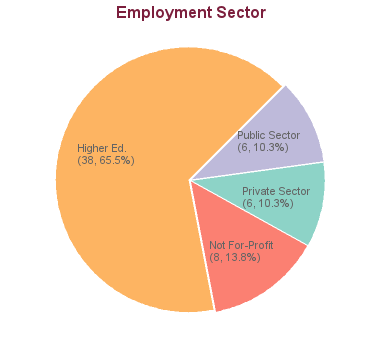
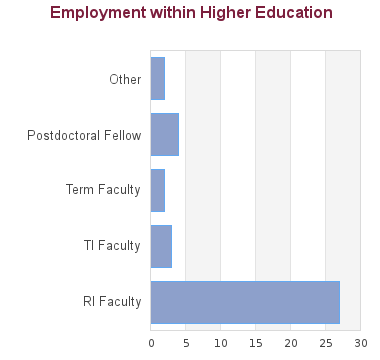
65 students graduated between 2005 and 2013: 1 graduate is seeking employment; for 6 we have no data (based on research conducted between Feb-May 2016). For the remaining 58 graduates:
These statistics show data for the Doctor of Philosophy in Geography (PhD). Data are separated for each degree program combination. You may view data for other degree options in the respective program profile.
| 2023 | 2022 | 2021 | 2020 | 2019 | |
|---|---|---|---|---|---|
| Applications | 40 | 55 | 53 | 52 | 57 |
| Offers | 7 | 9 | 7 | 10 | 13 |
| New Registrations | 6 | 8 | 7 | 10 | 12 |
| Total Enrolment | 61 | 67 | 68 | 73 | 71 |
Students in research-based programs usually require a faculty member to function as their thesis supervisor. Please follow the instructions provided by each program whether applicants should contact faculty members.
The most important first steps in applying for admission to our graduate program is finding and approaching a potential supervisor in the department. This gives you an opportunity to discuss the research you are interested in completing as a graduate student. Every applicant to the graduate program should, in principle, contact a potential supervisor to confirm that they are interested in reviewing the application. This does not constitute a promise from the supervisor that the student will be admitted, since admissions decisions are made by the Graduate Committee; it only serves as an indication that the potential supervisor is willing to consider supervising a new, incoming student.
These videos contain some general advice from faculty across UBC on finding and reaching out to a supervisor. They are not program specific.



This list shows faculty members with full supervisory privileges who are affiliated with this program. It is not a comprehensive list of all potential supervisors as faculty from other programs or faculty members without full supervisory privileges can request approvals to supervise graduate students in this program.
| Year | Citation |
|---|---|
| 2023 | Dr. Li explored the dynamics of ocean extreme temperature events, Marine Heatwaves, and their ecological impacts. Her work improves our understanding of the historical and future changes in multiple novel heat stress characteristics globally, and also demonstrates the protective impacts of "training" heat stress conditions on global coral reefs. |
| 2023 | Dr. Exler studied the hydrology of drained peatlands with a focus on how plant community shifts affect water exchange between the atmosphere and the peat body. His findings help understand how climate change may affect peatland ecohydrology, which is an integral part of ecosystem health in these environments that controls greenhouse gas release. |
| 2023 | Dr. Booker developed novel analyses to better understand how rivers respond to flooding. Using these methods, he demonstrated how river boundaries influence erosion and deposition in the river during floods. This work will help minimise human-related disturbance to riverine ecosystems. |
| 2023 | Dr. Al-Ghorani studied spatiotemporal variations in sediment transport at watershed and channel scales.Though sediment reduction measures focus more on upland soil conservation, she found that local channel conditions should also be considered when mitigating the negative impacts of excess sediment caused by unavoidable climate and landuse changes. |
| 2023 | Dr. Fabris' dissertation focused on the Piikani Nation's attempts to challenge the construction of the Oldman River Dam in the 1980s/1990s. His research findings draw attention to the continued limits of reconciling Indigenous law with Canadian law without addressing the implications of Indigenous jurisdiction. |
| 2023 | Dr. Skeeter investigated how greenhouse gases move into and out of two Arctic ecosystems with permafrost soils in the Mackenzie Delta Region using field observations and machine learning models |
| 2023 | Dr. Jones studied how transit-oriented development (TOD), increased redevelopment pressure on clusters of Vancouver's aging suburban rental housing. He critiqued the logic of TOD to argue against suburban gentrification and the displacement of marginalized renters. Dr. Jones found that these processes could be ameliorated by City Council leadership. |
| 2023 | Dr. McDowell examined how downstream differences in river characteristics cause differences in river response to floods, including topographic changes and sediment transport rates. |
| 2023 | Dr. Forrest researched the origins and development of a real-time urban traffic control system in Los Angeles, California. Through this case study, he sheds light on how both the material and cultural aspects of a municipal organization shape the city-wide implementation of digital infrastructures. |
| 2023 | Is there a pattern to one of humankind's greatest and apparently random natural hazards? Dr. Adams captured order and self-organisation amongst chaotic behaviour in mountain rivers. His experiments reveal that as rivers become more hazardous they also become more predictable and ordered, which provides opportunities for managing them. |
Geography covers physical, human and regional geography.
Physical geography has a strong natural science emphasis and focuses on physical and ecological systems at or close to the earth's surface, and the interaction of these systems with people. The major substantive specializations are biogeography, climatology, GIS and remote sensing, geomorphology, and hydrology.
Human geography explores the connections between human geography and political economy, social theory, and cultural studies and pursue their substantive implications for interpreting changes in past and present landscapes. Other work focuses on the political and policy aspects of these changes. Major areas of specialization are development geography, economic geography, feminist geography, historical geography, and social and cultural geography. Work in these fields often feeds into a strong general interest in urban geography and intersects with work in environmental geography.
Regional geography focuses on the following regions: Canada, Asia and the Pacific Rim, Russia and Eastern Europe, and Latin America.
Departments/Programs may update graduate degree program details through the Faculty & Staff portal. To update contact details for application inquiries, please use this form.

Find out how Vancouver enhances your graduate student experience—from the beautiful mountains and city landscapes, to the arts and culture scene, we have it all. Study-life balance at its best!