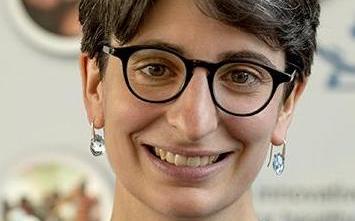
Costanza Casiraghi
Job Title
Senior Scientist
Employer
Chiesi Pharmaceuticals

Applicants to Master’s and Doctoral degrees are not affected by the recently announced cap on study permits. Review more details
The Microbiology and Immunology programme includes the study of bacteria, fungi, viruses, parasites as well as the immune system. Students can investigate the ecology, evolution and environments of microorganisms, the diseases they cause, the microbiome and its influence on the immune system and our health, immunity and disease. We are seeking solutions to the problem of antibiotic resistance; using microbial engineering in industrial processing and environmental remediation; determining how our immune system can best protect us against infection and cancer; using this information to design new immunotherapies and treatments for inflammation and auto-immune diseases. Our research spans population and systems biology and ecology, organism behavior and function, as well as cell interactions and molecular mechanisms. Our graduates are extensively trained in analytical thinking, creative innovation, and effective communication. Degrees in our programme accelerate students in a wide variety of careers in industry, academia, not-for-profit organisations, and the business world.
Microbiology has been an integral part of UBC since the university's inception in 1915. Our programme is a strong and collaborative community of microbiologists, immunologists, biochemists and cell biologists, based at UBC and affiliated hospitals. We promote fundamental and translational research and we enjoy strong connections to clinicians, engineers, and epidemiologists across Canada. Many of our students are located in the Life Sciences Institute, a world-class collection of scientists with core facilities for advanced flow cytometry, microscopy and imaging, and high-throughput biology together with the Facility for Infectious Disease and Epidemic Research. Other researchers are located in the Michael Smith Laboratories. We also work closely with a variety of local organizations such as adMare Bioinnovations and the Genome Sciences Centre, with opportunities for commercialisation and entrepreneurship.
The Faculty of Graduate and Postdoctoral Studies establishes the minimum admission requirements common to all applicants, usually a minimum overall average in the B+ range (76% at UBC). The graduate program that you are applying to may have additional requirements. Please review the specific requirements for applicants with credentials from institutions in:
Each program may set higher academic minimum requirements. Please review the program website carefully to understand the program requirements. Meeting the minimum requirements does not guarantee admission as it is a competitive process.
Applicants from a university outside Canada in which English is not the primary language of instruction must provide results of an English language proficiency examination as part of their application. Tests must have been taken within the last 24 months at the time of submission of your application.
Minimum requirements for the two most common English language proficiency tests to apply to this program are listed below:
Overall score requirement: 100
Reading
25
Writing
25
Speaking
25
Listening
25
Overall score requirement: 7.0
Reading
6.5
Writing
6.5
Speaking
6.5
Listening
6.5
Some programs require additional test scores such as the Graduate Record Examination (GRE) or the Graduate Management Test (GMAT). The requirements for this program are:
The GRE is not required.
All applicants have to submit transcripts from all past post-secondary study. Document submission requirements depend on whether your institution of study is within Canada or outside of Canada.
A minimum of three references are required for application to graduate programs at UBC. References should be requested from individuals who are prepared to provide a report on your academic ability and qualifications.
Many programs require a statement of interest, sometimes called a "statement of intent", "description of research interests" or something similar.
Students in research-based programs usually require a faculty member to function as their thesis supervisor. Please follow the instructions provided by each program whether applicants should contact faculty members.
Permanent Residents of Canada must provide a clear photocopy of both sides of the Permanent Resident card.
All applicants must complete an online application form and pay the application fee to be considered for admission to UBC.
| Fees | Canadian Citizen / Permanent Resident / Refugee / Diplomat | International |
|---|---|---|
| Application Fee | $114.00 | $168.25 |
| Tuition * | ||
| Installments per year | 3 | 3 |
| Tuition per installment | $1,838.57 | $3,230.06 |
| Tuition per year (plus annual increase, usually 2%-5%) | $5,515.71 | $9,690.18 |
| Int. Tuition Award (ITA) per year (if eligible) | $3,200.00 (-) | |
| Other Fees and Costs | ||
| Student Fees (yearly) | $1,116.60 (approx.) | |
| Costs of living | Estimate your costs of living with our interactive tool in order to start developing a financial plan for your graduate studies. | |
Applicants to UBC have access to a variety of funding options, including merit-based (i.e. based on your academic performance) and need-based (i.e. based on your financial situation) opportunities.
All full-time PhD students in the Department of Microbiology and Immunology will be provided with a funding package of $29,270 stipend plus a life supplement equivalent to tuition for up to five years of their PhD. The funding package may consist of any combination of internal or external awards, teaching-related work, research assistantships, and graduate academic assistantships.
All applicants are encouraged to review the awards listing to identify potential opportunities to fund their graduate education. The database lists merit-based scholarships and awards and allows for filtering by various criteria, such as domestic vs. international or degree level.
Many professors are able to provide Research Assistantships (GRA) from their research grants to support full-time graduate students studying under their supervision. The duties constitute part of the student's graduate degree requirements. A Graduate Research Assistantship is considered a form of fellowship for a period of graduate study and is therefore not covered by a collective agreement. Stipends vary widely, and are dependent on the field of study and the type of research grant from which the assistantship is being funded.
Graduate programs may have Teaching Assistantships available for registered full-time graduate students. Full teaching assistantships involve 12 hours work per week in preparation, lecturing, or laboratory instruction although many graduate programs offer partial TA appointments at less than 12 hours per week. Teaching assistantship rates are set by collective bargaining between the University and the Teaching Assistants' Union.
Academic Assistantships are employment opportunities to perform work that is relevant to the university or to an individual faculty member, but not to support the student’s graduate research and thesis. Wages are considered regular earnings and when paid monthly, include vacation pay.
Canadian and US applicants may qualify for governmental loans to finance their studies. Please review eligibility and types of loans.
All students may be able to access private sector or bank loans.
Many foreign governments provide support to their citizens in pursuing education abroad. International applicants should check the various governmental resources in their home country, such as the Department of Education, for available scholarships.
The possibility to pursue work to supplement income may depend on the demands the program has on students. It should be carefully weighed if work leads to prolonged program durations or whether work placements can be meaningfully embedded into a program.
International students enrolled as full-time students with a valid study permit can work on campus for unlimited hours and work off-campus for no more than 20 hours a week.
A good starting point to explore student jobs is the UBC Work Learn program or a Co-Op placement.
Students with taxable income in Canada may be able to claim federal or provincial tax credits.
Canadian residents with RRSP accounts may be able to use the Lifelong Learning Plan (LLP) which allows students to withdraw amounts from their registered retirement savings plan (RRSPs) to finance full-time training or education for themselves or their partner.
Please review Filing taxes in Canada on the student services website for more information.
Applicants have access to the cost estimator to develop a financial plan that takes into account various income sources and expenses.
75 students graduated between 2005 and 2013: 1 graduate is seeking employment; 1 is in a non-salaried situation; for 7 we have no data (based on research conducted between Feb-May 2016). For the remaining 66 graduates:
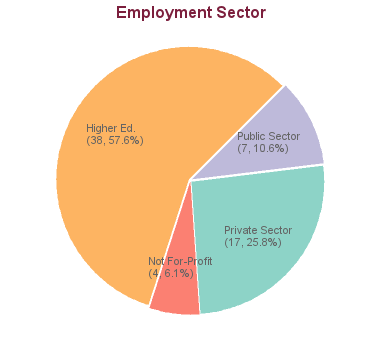
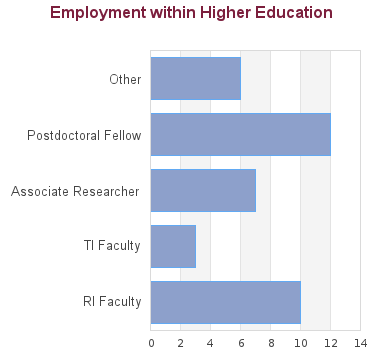
These statistics show data for the Doctor of Philosophy in Microbiology and Immunology (PhD). Data are separated for each degree program combination. You may view data for other degree options in the respective program profile.
| 2023 | 2022 | 2021 | 2020 | 2019 | |
|---|---|---|---|---|---|
| Applications | 41 | 37 | 28 | 38 | 30 |
| Offers | 10 | 7 | 10 | 6 | 3 |
| New Registrations | 8 | 7 | 9 | 6 | 2 |
| Total Enrolment | 67 | 63 | 65 | 59 | 59 |
Students in research-based programs usually require a faculty member to function as their thesis supervisor. Please follow the instructions provided by each program whether applicants should contact faculty members.
These videos contain some general advice from faculty across UBC on finding and reaching out to a supervisor. They are not program specific.



This list shows faculty members with full supervisory privileges who are affiliated with this program. It is not a comprehensive list of all potential supervisors as faculty from other programs or faculty members without full supervisory privileges can request approvals to supervise graduate students in this program.
| Year | Citation |
|---|---|
| 2023 | Dr. Huggins studied how microorganisms use nitrogen in low-oxygen marine waters. She found that, in some cases, nitrogen can be recycled faster than it is lost from the environment. Her work adds to our knowledge about the impacts of oxygen loss and climate change in the oceans. |
| 2023 | Dr. Dostert studied communities of the highly antibiotic resistant bacterium Pseudomonas aeruginosa. She identified genes mediating community growth in diverse environments. Her research demonstrated the strong influence of the growth environment on the entire gene network and provided interesting gene candidates for the design of novel drugs. |
| 2023 | Dr. Morales Duran found that acidic environmental pH decreased the activity of antibiotics against the CF pathogen B. cenocepacia, and induced changes in the bacterium that are associated with host colonization and pathogenicity. |
| 2023 | Dr. Krekhno investigated mechanisms of pathogenic E. coli-caused infantile diarrhea, providing insights into host-microbe interactions. He employed computational and molecular biology tools to provide the first comprehensive overview of the changes in the regulation of gene expression during infection. |
| 2023 | Dr. Liu explored how plant-associated bacteria influence plant immunity and shield plants from pathogens. She discovered that bacteria dampen immunity through root acidification and protect plants via biofilm formation. Her work advances our grasp of plant-microbe interactions, offering insights into agricultural microbiome engineering. |
| 2023 | Dr. Morse worked on how a common intestinal virus infection influences the immune system and the gut microbiome to trigger the onset of type 1 diabetes. His research shows how environmental stressors engage in cross-communication with the host to impact development of autoimmune diseases. |
| 2023 | Dr. Niemietz defined mechanisms by which hyaluronan influences human neutrophil functionality and how this potentially contributes to childhood-onset rheumatic diseases. Her research significantly expands our understanding of neutrophils in the human inflammatory response. |
| 2023 | Dr. Cirstea explored the role of gut microbiota in Parkinson's disease. Using human clinical studies and experimental models, he discovered several new connections between the bacteria in our guts and disease-relevant features. |
| 2023 | Dr. Peña Díaz studied a group of molecules utilized by intestinal bacteria to perform cell-to-cell communication, and investigated their importance both during health and disease. His research will help in the development of novel therapeutics that could be used to manipulate bacterial behaviour as a method to treat infections. |
| 2023 | Dr. Woodward used genetic barcoding to study population dynamics of intestinal pathogens. She found that manipulating host protective barriers to infection determines overall disease outcome. This research provides insights into infection ecology and how the gut environment can shape the population-level diversity of outbreaks. |
Microbiology and Immunology offers opportunities for original research in the areas of molecular and applied microbiology, biotechnology, cell and developmental biology, epigenetics, geomicrobiology, molecular biology, molecular genetics, molecular immunology, microbial ecology, microbial pathogenesis, and virology.
Departments/Programs may update graduate degree program details through the Faculty & Staff portal. To update contact details for application inquiries, please use this form.
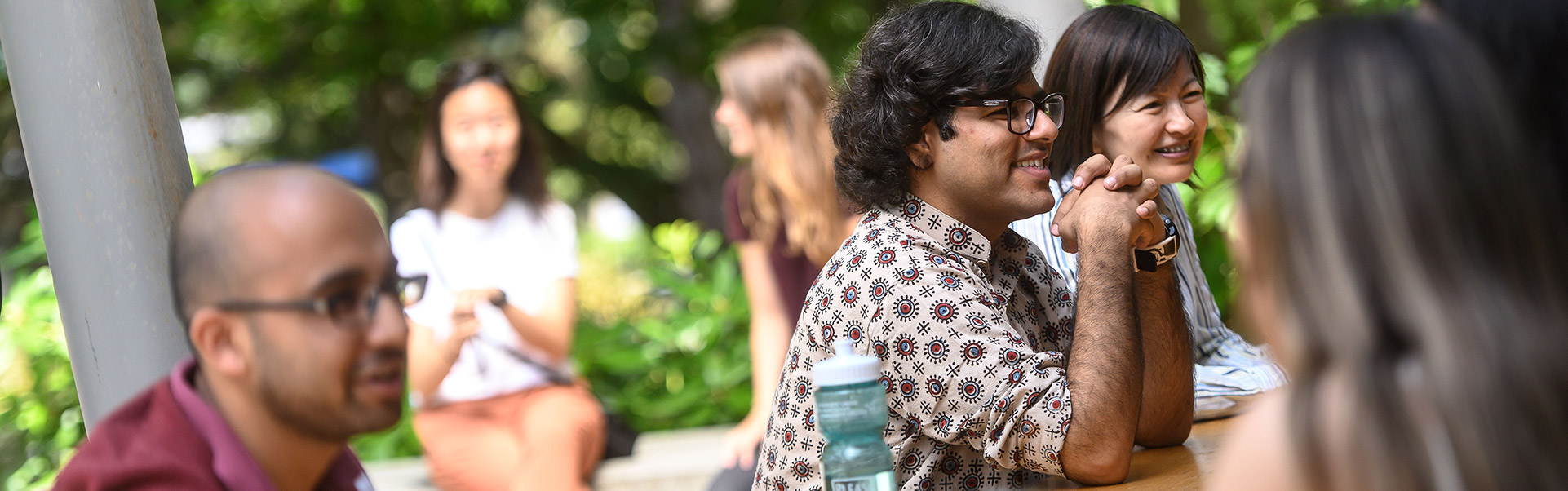
Our community of scholars is one of the world’s finest, committed to discovering and sharing knowledge, and to tackling the challenges that face our world.