
Canadian Immigration Updates
Applicants to Master’s and Doctoral degrees are not affected by the recently announced cap on study permits. Review more details
Overview
The department has a strong research record, and is particularly proud of its mix of fundamental research coupled with industrial relevance and interaction. The department offers opportunities for study in the fields of casting and solidification of metals, ceramic processes and properties, corrosion, composite material processing and properties, hydrometallurgy and electrorefining, physical metallurgy, pyrometallurgy, remelting processes, thermomechanical processing and environmental processing.
What makes the program unique?
The Department of Materials Engineering at UBC (MTRL) is one of the top-rated materials programs in North America with activities spanning our internationally-leading program in hydrometallurgy to our leading edge research and teaching in sustainability, nanomaterials, biomaterials and composites.
Quick Facts
Program Enquiries
Contact the program
Admission Information & Requirements
1) Check Eligibility
Minimum Academic Requirements
The Faculty of Graduate and Postdoctoral Studies establishes the minimum admission requirements common to all applicants, usually a minimum overall average in the B+ range (76% at UBC). The graduate program that you are applying to may have additional requirements. Please review the specific requirements for applicants with credentials from institutions in:
Each program may set higher academic minimum requirements. Please review the program website carefully to understand the program requirements. Meeting the minimum requirements does not guarantee admission as it is a competitive process.
English Language Test
Applicants from a university outside Canada in which English is not the primary language of instruction must provide results of an English language proficiency examination as part of their application. Tests must have been taken within the last 24 months at the time of submission of your application.
Minimum requirements for the two most common English language proficiency tests to apply to this program are listed below:
TOEFL: Test of English as a Foreign Language - internet-based
Overall score requirement: 90
Reading
22
Writing
21
Speaking
21
Listening
22
IELTS: International English Language Testing System
Overall score requirement: 6.5
Reading
6.0
Writing
6.0
Speaking
6.0
Listening
6.0
Other Test Scores
Some programs require additional test scores such as the Graduate Record Examination (GRE) or the Graduate Management Test (GMAT). The requirements for this program are:
The GRE is not required.
2) Meet Deadlines
January 2025 Intake
Application Open Date
01 March 2024Canadian Applicants
International Applicants
May 2025 Intake
Application Open Date
01 August 2024Canadian Applicants
International Applicants
3) Prepare Application
Transcripts
All applicants have to submit transcripts from all past post-secondary study. Document submission requirements depend on whether your institution of study is within Canada or outside of Canada.
Letters of Reference
A minimum of three references are required for application to graduate programs at UBC. References should be requested from individuals who are prepared to provide a report on your academic ability and qualifications.
Statement of Interest
Many programs require a statement of interest, sometimes called a "statement of intent", "description of research interests" or something similar.
Supervision
Students in research-based programs usually require a faculty member to function as their thesis supervisor. Please follow the instructions provided by each program whether applicants should contact faculty members.
Instructions regarding thesis supervisor contact for Doctor of Philosophy in Materials Engineering (PhD)
Citizenship Verification
Permanent Residents of Canada must provide a clear photocopy of both sides of the Permanent Resident card.
4) Apply Online
All applicants must complete an online application form and pay the application fee to be considered for admission to UBC.
Research Information
Research Facilities
Research Centres are: Advanced Materials Process Engineering Laboratory (AMPEL), Centre for Metallurgical Process Engineering, Clean Energy Research Centre, Electron Microscope Laboratory, MagNet - Magnesium Network.
Tuition & Financial Support
Tuition
| Fees | Canadian Citizen / Permanent Resident / Refugee / Diplomat | International |
|---|---|---|
| Application Fee | $114.00 | $168.25 |
| Tuition * | ||
| Installments per year | 3 | 3 |
| Tuition per installment | $1,838.57 | $3,230.06 |
| Tuition per year (plus annual increase, usually 2%-5%) | $5,515.71 | $9,690.18 |
| Int. Tuition Award (ITA) per year (if eligible) | $3,200.00 (-) | |
| Other Fees and Costs | ||
| Student Fees (yearly) | $1,116.60 (approx.) | |
| Costs of living | Estimate your costs of living with our interactive tool in order to start developing a financial plan for your graduate studies. | |
All fees for the year are subject to adjustment and UBC reserves the right to change any fees without notice at any time, including tuition and student fees. Tuition fees are reviewed annually by the UBC Board of Governors. In recent years, tuition increases have been 2% for continuing domestic students and between 2% and 5% for continuing international students. New students may see higher increases in tuition. Admitted students who defer their admission are subject to the potentially higher tuition fees for incoming students effective at the later program start date. In case of a discrepancy between this webpage and the UBC Calendar, the UBC Calendar entry will be held to be correct.
Financial Support
Applicants to UBC have access to a variety of funding options, including merit-based (i.e. based on your academic performance) and need-based (i.e. based on your financial situation) opportunities.
Program Funding Packages
From September 2024 all full-time students in UBC-Vancouver PhD programs will be provided with a funding package of at least $24,000 for each of the first four years of their PhD. The funding package may consist of any combination of internal or external awards, teaching-related work, research assistantships, and graduate academic assistantships. Please note that many graduate programs provide funding packages that are substantially greater than $24,000 per year. Please check with your prospective graduate program for specific details of the funding provided to its PhD students.
Average Funding
- 12 students received Teaching Assistantships. Average TA funding based on 12 students was $4,157.
- 23 students received Research Assistantships. Average RA funding based on 23 students was $27,152.
- 10 students received Academic Assistantships. Average AA funding based on 10 students was $1,887.
- 24 students received internal awards. Average internal award funding based on 24 students was $6,260.
Review methodology
Scholarships & awards (merit-based funding)
All applicants are encouraged to review the awards listing to identify potential opportunities to fund their graduate education. The database lists merit-based scholarships and awards and allows for filtering by various criteria, such as domestic vs. international or degree level.
Graduate Research Assistantships (GRA)
Many professors are able to provide Research Assistantships (GRA) from their research grants to support full-time graduate students studying under their supervision. The duties constitute part of the student's graduate degree requirements. A Graduate Research Assistantship is considered a form of fellowship for a period of graduate study and is therefore not covered by a collective agreement. Stipends vary widely, and are dependent on the field of study and the type of research grant from which the assistantship is being funded.
Graduate Teaching Assistantships (GTA)
Graduate programs may have Teaching Assistantships available for registered full-time graduate students. Full teaching assistantships involve 12 hours work per week in preparation, lecturing, or laboratory instruction although many graduate programs offer partial TA appointments at less than 12 hours per week. Teaching assistantship rates are set by collective bargaining between the University and the Teaching Assistants' Union.
Graduate Academic Assistantships (GAA)
Academic Assistantships are employment opportunities to perform work that is relevant to the university or to an individual faculty member, but not to support the student’s graduate research and thesis. Wages are considered regular earnings and when paid monthly, include vacation pay.
Financial aid (need-based funding)
Canadian and US applicants may qualify for governmental loans to finance their studies. Please review eligibility and types of loans.
All students may be able to access private sector or bank loans.
Foreign government scholarships
Many foreign governments provide support to their citizens in pursuing education abroad. International applicants should check the various governmental resources in their home country, such as the Department of Education, for available scholarships.
Working while studying
The possibility to pursue work to supplement income may depend on the demands the program has on students. It should be carefully weighed if work leads to prolonged program durations or whether work placements can be meaningfully embedded into a program.
International students enrolled as full-time students with a valid study permit can work on campus for unlimited hours and work off-campus for no more than 20 hours a week.
A good starting point to explore student jobs is the UBC Work Learn program or a Co-Op placement.
Tax credits and RRSP withdrawals
Students with taxable income in Canada may be able to claim federal or provincial tax credits.
Canadian residents with RRSP accounts may be able to use the Lifelong Learning Plan (LLP) which allows students to withdraw amounts from their registered retirement savings plan (RRSPs) to finance full-time training or education for themselves or their partner.
Please review Filing taxes in Canada on the student services website for more information.
Cost Estimator
Applicants have access to the cost estimator to develop a financial plan that takes into account various income sources and expenses.
Career Outcomes
52 students graduated between 2005 and 2013: 1 graduate is seeking employment; for 7 we have no data (based on research conducted between Feb-May 2016). For the remaining 44 graduates:
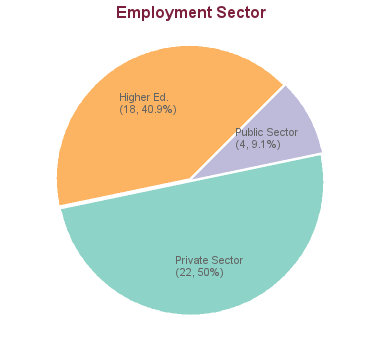
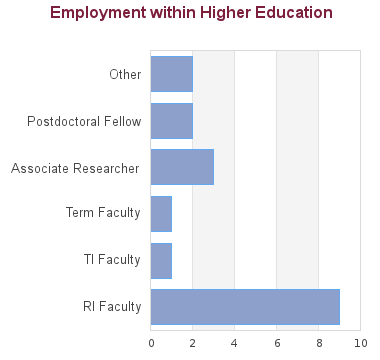
RI (Research-Intensive) Faculty: typically tenure-track faculty positions (equivalent of the North American Assistant Professor, Associate Professor, and Professor positions) in PhD-granting institutions
TI (Teaching-Intensive) Faculty: typically full-time faculty positions in colleges or in institutions not granting PhDs, and teaching faculty at PhD-granting institutions
Term Faculty: faculty in term appointments (e.g. sessional lecturers, visiting assistant professors, etc.)
Sample Employers in Higher Education
University of British Columbia (3)McMaster University (2)
University of Manchester
University of Tehran
Mewar University
Southwest Jiaotong University
Northeastern University (Shenjang, China)
Queen's University
University of California - Santa Barbara
University of Calgary
Sample Employers Outside Higher Education
Novelis Inc. (3)Aperam
Influitive
BioInspire Technologies
Stream-Flo Industries
Niroo Research Institute
Natural Resources Canada
ArcelorMittal
AREAVA
Dana Canada Corporation
Sample Job Titles Outside Higher Education
Research Scientist (3)Research Engineer (2)
Hydrometallurgical Engineer
Research Professional
Improvement Facilitator
Orthopaedic Engineer / Cleanroom Engineer
Principal Technology Development Engineer
Faculty Member
CFD / FEA Specialist
Project Manager
PhD Career Outcome Survey
You may view the full report on career outcomes of UBC PhD graduates on outcomes.grad.ubc.ca.Disclaimer
This program underwent a name or structural change in the study time frame, and all alumni from the previous program were included in these summaries. These data represent historical employment information and do not guarantee future employment prospects for graduates of this program. They are for informational purposes only. Data were collected through either alumni surveys or internet research.Enrolment, Duration & Other Stats
These statistics show data for the Doctor of Philosophy in Materials Engineering (PhD). Data are separated for each degree program combination. You may view data for other degree options in the respective program profile.
ENROLMENT DATA
| 2023 | 2022 | 2021 | 2020 | 2019 | |
|---|---|---|---|---|---|
| Applications | 42 | 36 | 44 | 39 | 45 |
| Offers | 9 | 11 | 13 | 8 | 7 |
| New Registrations | 6 | 8 | 12 | 6 | 5 |
| Total Enrolment | 49 | 55 | 61 | 53 | 60 |
Completion Rates & Times
Disclaimer
Research Supervisors
Supervision
Students in research-based programs usually require a faculty member to function as their thesis supervisor. Please follow the instructions provided by each program whether applicants should contact faculty members.
Instructions regarding thesis supervisor contact for Doctor of Philosophy in Materials Engineering (PhD)
Advice and insights from UBC Faculty on reaching out to supervisors
These videos contain some general advice from faculty across UBC on finding and reaching out to a supervisor. They are not program specific.



This list shows faculty members with full supervisory privileges who are affiliated with this program. It is not a comprehensive list of all potential supervisors as faculty from other programs or faculty members without full supervisory privileges can request approvals to supervise graduate students in this program.
-
Amini, Kiana (Electrochemical Energy Storage and Conversion; Redox Flow Batteries; Fuel Cells In Situ Characterization of Electrochemical Processes; Electrolyte Design and Battery Architecture; Multi-Physics Modeling of Electrochemical Systems)
-
Asselin, Edouard (Hydrometallurgy (including leaching, electrometallurgy and residue characterization), Electrochemistry (including high temperature electrochemistry and sensors))
-
Britton, Ben (Metals and alloy materials engineering; Manufacturing engineering; Materials characterisation & microstructure; Metallurgy; Electron diffraction & microscopy; Deformation; Microstructure/property models; Manufacturing)
-
Cockcroft, Steven (Clean Energy Research, Physical phenomena in non-ferrous casting, hot tearing, Optimization of industrial casting processes, Mathematical modeling)
-
Dixon, David (Fixed-bed leaching)
-
Dreisinger, David (Hydrometallurgy industry, iron, copper)
-
Kravchenko, Sergii (Polymers and polymer composites; Multi-functional composites; High-throughput manufacturing process modelling of composites; Multi-scale, multi-physics, probabilistic computational modelling of composites; Manufacturing-informed performance simulation of composites; Machine learning methods in composites manufacturing and performance analysis; Composite structures for renewable energy & unmanned vehicles; additive manufacturing)
-
Liu, Wenying (Use of sea water in heap leaching; Release of selenium and associated toxic elements from mine waste materials; Heap leach modelling )
-
Maijer, Daan (Heat Transfer, Fluid Flow, Stress, Microstructure Materials processing models employed for process control)
-
Militzer, Matthias (Multi-scale modelling of microstructure evolution, Physical metallurgy of advanced high strength steels)
-
Poole, Warren (Advanced aluminum alloys, High strengths, high formable steels, Metal matrix composites, Microstructure/property models)
-
Poursartip, Anoush (Polymer matrix composite materials)
-
Sinclair, Chadwick (Predicting the correlation between the structure of alloys, at the microstructural and atomic scale, and their mechanical behaviour )
-
Wang, Rizhi (Biomaterials, biomechanics Also, the structure and formation processes of biologically formed materials (eg seashells, silk, teeth) and applies the mechanisms to the design and processing of novel materials)
-
Xia, Guangrui (Group IV semiconductors in microelectronics; Si compatible lasers; 2D semiconductors; 3D integration of Ics; Raman spectroscopy )
Doctoral Citations
| Year | Citation |
|---|---|
| 2023 | Dr. Badawy developed a smart fabric made by growing Zinc oxide nano-wires on yarns. This smart fabric can record in real-time applied deformation and identify its location and magnitude. It can be used in the health care system to improve the diagnosis process, create treatment plans, and monitor patients' health conditions during a hospital stay. |
| 2023 | Dr. Krishnamoorthy estimated how a catalytic solute is distributed when applied to columns of low-grade copper ore. This work helps in optimizing a novel catalytic leach technology developed in UBC to liberate copper from primary copper sulfide ores such as chalcopyrite. |
| 2023 | Dr. Soltani examined the behavior of materials at the atomistic scale. He used computer simulation of atoms and machine learning algorithms to understand how the dynamic processes derive the evolution of micro-structure of materials and how these processes determine the properties of materials like glasses and metals. |
| 2023 | Dr. Romualdi investigated the effect of chemical composition and thermal cycles on the weld heat affected zone of line pipe steels as a critical aspect of pipeline integrity that will remain significant for future applications including carbon capture and a hydrogen fuel energy matrix. |
| 2023 | Dr. Suhane integrated atomistic and mesoscale simulations and investigated the effect of alloying on microstructural processes in steels. His work provides new avenues for designing high-performance steels for infrastructure and automotive applications. |
| 2023 | Dr. Jain studied Geopolymers, environment-friendly alternatives to Portland Cement, for cesium nuclear waste immobilization. Dr. Jain demonstrated enhanced cesium immobilization within the Geopolymers processed via one-step chemical synthesis route. Safer long-term nuclear waste storage will be possible because of Dr. Jain's work. |
| 2023 | Dr. Le examined the structural hierarchical effects in electronic textiles, and their influence on performance of wearable sensors used for health monitoring. Contributions include functional materials development to address long-term performance and durability. Her findings will inform future e-textile materials evaluation, selection, and design. |
| 2023 | Dr. Chen developed a novel method to mimic bone mineral structure on a polymer membrane as a coating. She applied this coating for bone health, osteoporosis treatment, and cancer-induced bone metastases studies. Her research provided a new platform for bone-related investigation and improved the understanding of the bone resorption process. |
| 2023 | Dr. Koresh studied a novel approach to preparing solid-state electrolytes. The electrolyte is a key component for next-generation lithium-ion batteries - batteries that would drive your EV car significantly longer before recharging. His research explored new types of solid-state electrolytes and gained a deep understanding of their properties. |
| 2023 | Dr. Gunaratnam investigated iron behaviour and silver deportment through a unique industrial process employed in the mining industry to recover silver and gold from minerals with high iron and sulfide content. Her research illuminates the best operating conditions that maximize silver recovery. |
Pages
Sample Thesis Submissions
Further Information
Specialization
Materials Engineering offers opportunities for study in the following fields: casting and solidification of metals; ceramic processing and properties; refractories; corrosion; composites; high temperature coatings; biomaterials; extractive metallurgy including hydrometallurgy, bio-hydrometallurgy, electrometallurgy, and pyrometallurgy; physical metallurgy; thermo-mechanical processing related to materials production; environmental issues related to materials productions; electronic materials; nanofibers; textile structural composites.
Materials Engineers are experts on the entire life cycle of materials, including recovery of materials from minerals, making engineered materials, manufacturing materials into products, understanding and evaluating materials performance, proper disposal and recycling of materials, and evaluating societal and economic benefits.
Program Website
Faculty Overview
Academic Unit
Program Identifier
Classification
January 2025 Intake
May 2025 Intake
Program Enquiries
Contact the program
Departments/Programs may update graduate degree program details through the Faculty & Staff portal. To update contact details for application inquiries, please use this form.
Curious about UBC for grad school?
Our community of scholars is one of the world’s finest, committed to discovering and sharing knowledge, and to tackling the challenges that face our world.